Restoration of the Christian County Courthouse and redevelopment of areas surrounding the building are part of a proposal that architects presented Tuesday to county magistrates.
JRA Architects initially worked on plans for a total restoration of the courthouse but eventually expanded the proposal to include a parking garage, outdoor public spaces and pedestrian-friendly elements intended to slow traffic on South Main Street.
“The vision got a little bit bigger and a little bit bigger,” said Timothy Graviss, who heads up the firm’s Historic Preservation/Restoration Division.
Cost estimates have not been finalized, but it appears to be a multimillion-dollar project.
Judge-Executive Jerry Gilliam said the county cannot seek state and federal funding for the project without a clear plan for improvements to the courthouse and part of historic downtown district. Creating a master plan is the first step in a project that could take several years to develop, officials said.
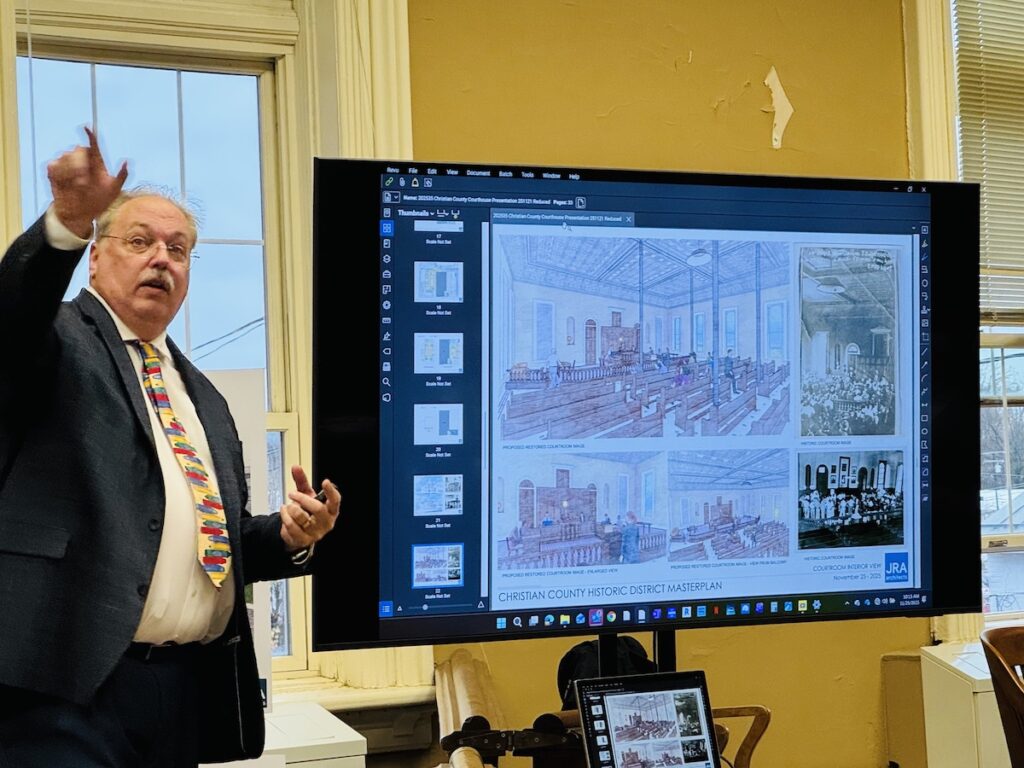
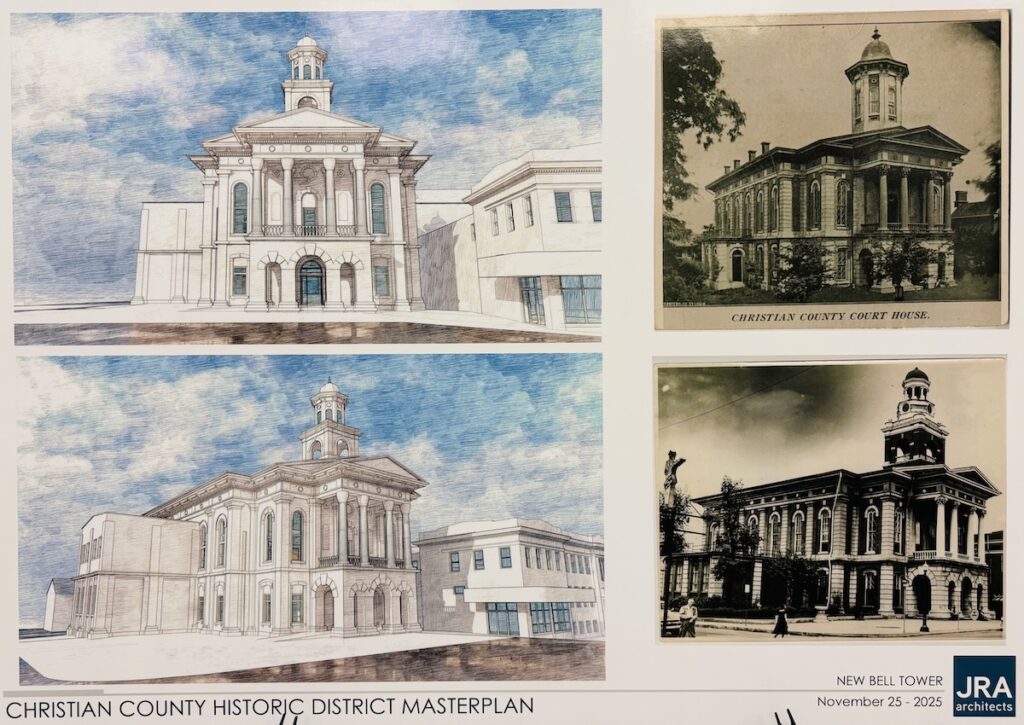
The courthouse restoration would return much of the building’s interior to its original design. For example, Graviss said drop ceilings would be removed to reveal the original tin ceilings. In addition, a balcony in the historic courtroom on the second floor would be brought back.
The architectural renderings presented at the fiscal court meeting also show the addition of a cupola on the courthouse roof.
The courthouse, built in 1869, had a cupola in its original construction. That cupola was replaced with another “more imposing version” in 1903, but it was removed around 1960 because of concerns the roof could not support its weight.
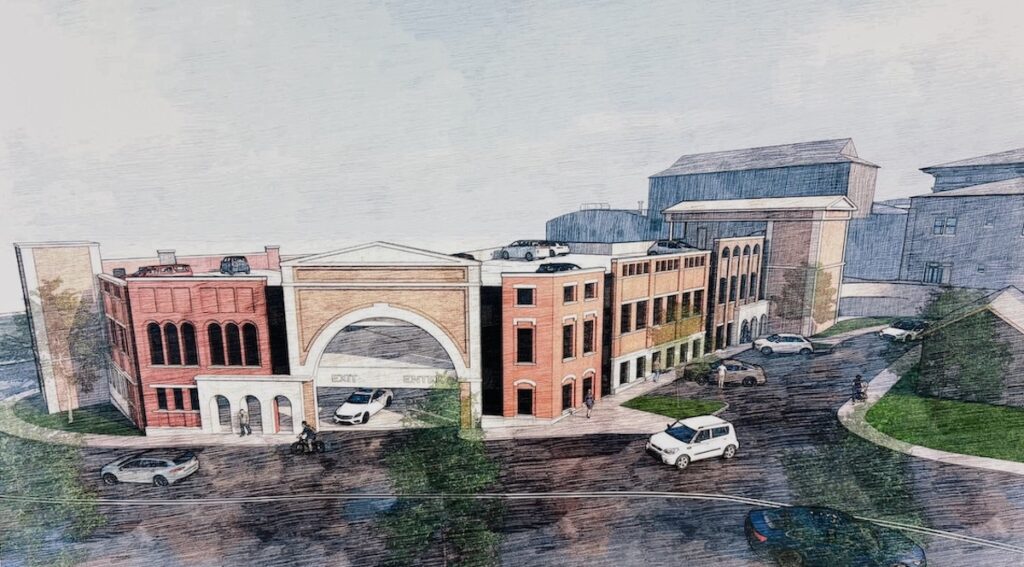
A three-level parking garage with 144 parking spaces is proposed in the current parking lot between Weber Street and Riverfront Drive.
Graviss said the exterior of the garage should complement historic buildings in the area.
On the Court Street side of the courthouse, the lawn and sidewalk could be altered and expanded to create areas for gatherings.
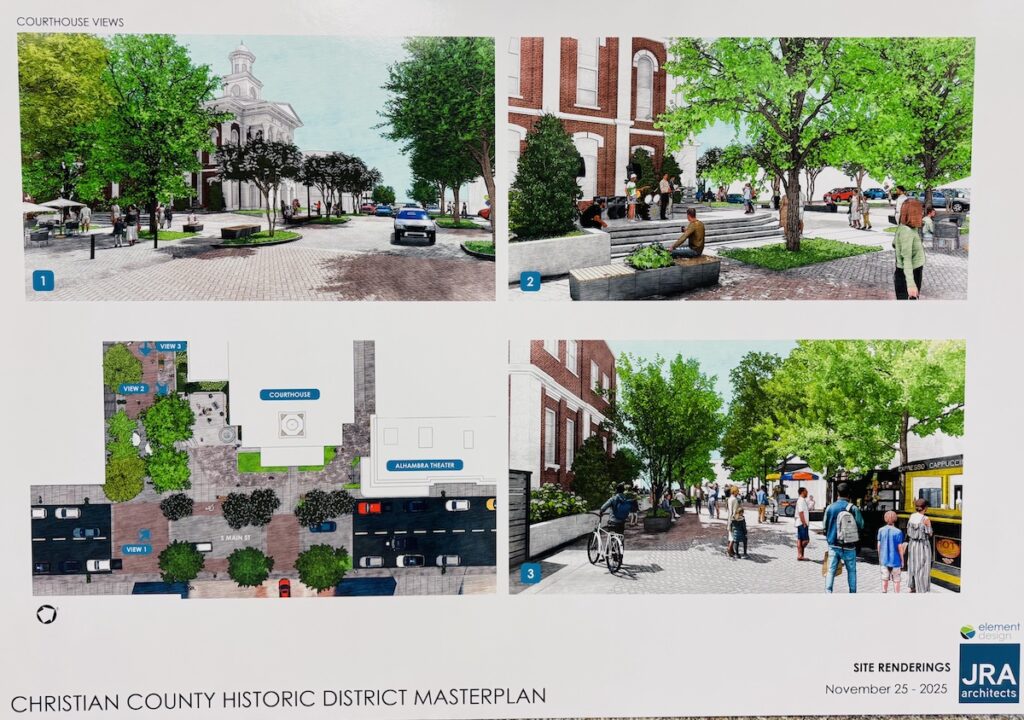
In front of the courthouse, the proposal envisions altered paving and landscaping to slow traffic. The goal would be to encourage more pedestrians in the area by getting drivers to slow down, said Graviss’ colleague, Evan McDaniel, a landscape architect.
Graviss described the master plan as a way to “bring life” to Hopkinsville’s historic district.

Jennifer P. Brown is co-founder, publisher and editor of Hoptown Chronicle. You can reach her at editor@hoptownchronicle.org. Brown was a reporter and editor at the Kentucky New Era, where she worked for 30 years. She is a co-chair of the national advisory board to the Institute for Rural Journalism and Community Issues, governing board past president for the Kentucky Historical Society, and co-founder of the Kentucky Open Government Coalition. She serves on the Hopkinsville History Foundation's board.