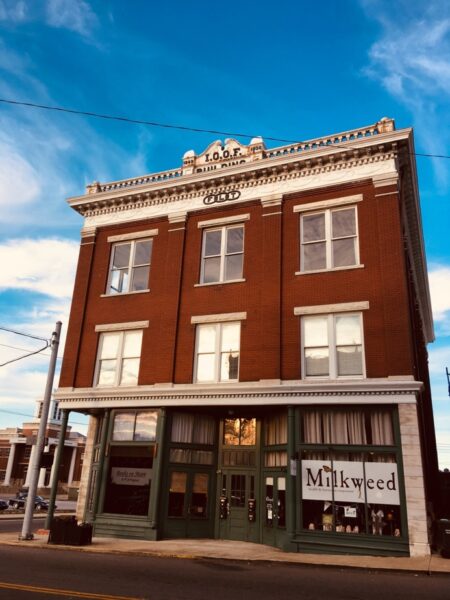
The building constructed in 1902 has housed several businesses over its history, including four drug stores. The last one, Herb Brandt's Corner Drugs, closed in 1989
Baptist churches in the region established an organization to create the private girls school in 1854. The main campus was on West 15th Street between Main and Canton streets.
In the 1963 Democratic primary, Edward Thompson "Ned" Breathitt Jr. defeated a former governor, A.B. “Happy” Chandler, for his party’s nomination. Then he beat the Republican nominee by approximately 13,000 votes.
On Jan. 19, 1862, Confederate troops marched northward from the Cumberland River to attack advancing Union troops. Fought west of Somerset in the fog and rain, Mill Springs became a battle marked by confusion.
The collection features fictionalized accounts of Poston's childhood, growing up in the 1910s in segregated Hopkinsville. The author and his buddies play the heroes, often outwitting the white community, but also their black elders.
The three streets that comprise most of the Anvirdale Historic District — Mooreland Drive, Latham Avenue and Alumni Avenue — are listed on the National Register of Historic Places.
Douglas Charles will present the third annual Sid Easley Lecture in the Curris Center Ballroom on the Murray State University campus at 7 p.m. The presentation, entitled “The FBI in Time and Place, Then & Now,” is free and open to the public.