When the new Christian County High School opens in five months, an estimated 1,950 students will walk into the two-story building comprised of roughly 360,000 square feet.
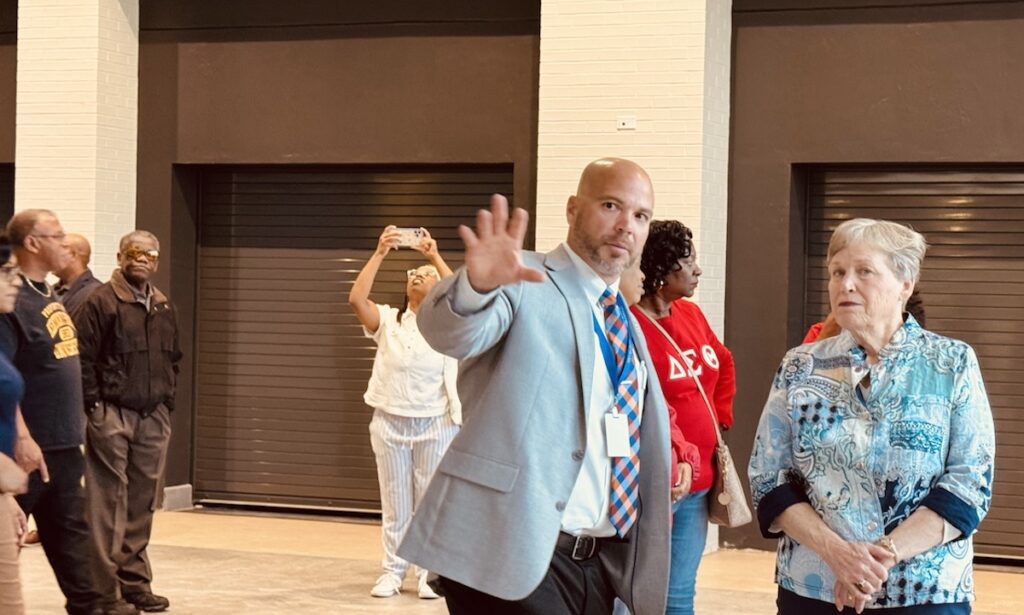
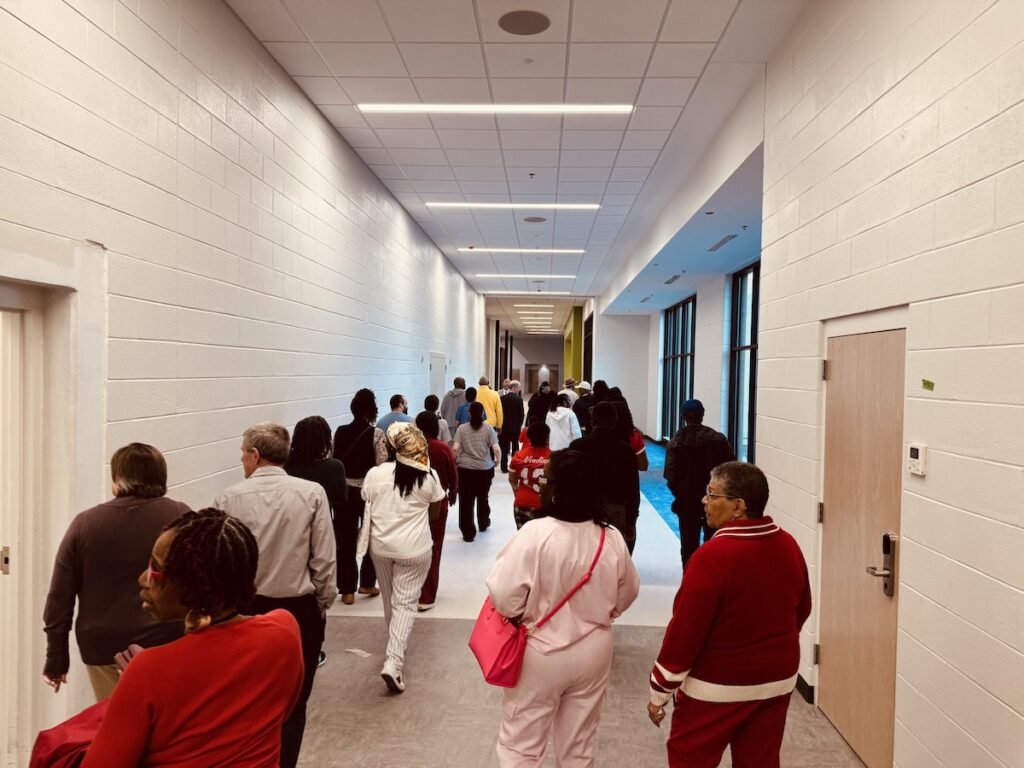
The massive size was evident to a group of several dozen visitors who covered close to 1.5 miles during their walk through the building with Ken Carver, the executive principal.
“I almost got lost,” one man quipped as the tour wrapped up Thursday evening.
The school will combine the county’s current two public high schools — Hopkinsville and Christian County. It will be the first school consolidation in Christian County since 1959 when Pembroke, Crofton, Sinking Fork, South Christian and Lacy high schools were combined to create the first Christian County High School. In addition, Attucks High School, a segregated school for Black students, had its last graduating class in 1967.
The new school, a greenhouse and athletic fields for soccer, baseball and softball are on an 87-acre campus at Fort Campbell Boulevard and Lovers Lane. A groundbreaking ceremony was conducted in late summer of 2023. The majority of construction is now completed. Most of the work that remains includes some flooring installation, painting and furnishings.
Superintendent Chris Bentzel, who joined Thursday’s tour, said 66 buses will bring students to the school each day.
A big change
Carver said the district wants the new CCHS to be a facility for the entire community. Administrators have been conducting a series of tours to get local residents familiar with the school and its design. Some community member are at odds with the loss of two high schools and the traditions they represented as sports rivals.
“Whether you agree or disagree with this merger, it’s here. It’s happening,” Carver said during the group tour that was organized by Focus 21st Century Minority Leadership and the Hopkinsville Alumnae Chapter of Delta Sigma Theta.
Carver also urged some patience when the school year begins.
“We’re not going to be perfect. It’s going to take a year or two to iron out some of the wrinkles,” he said. “But we appreciate your support and prayers. It’s about the kids.”
Carver appeared emotional when he described what the school could represent for students.
“I love this story — I wasn’t here for it — but somebody told me that when they were explaining this to a student and showing them the renderings of what was coming, the young lady said, ‘We’re not ever going to get anything like that here in Christian County.’”
He said, “They deserve it. The community deserves it.”
After the tour, Carver explained why this story touched him personally. He said he understood the student’s skepticism when she first saw plans for the new school.
“I can kind of relate to that a little bit … growing up my parents worked hard,” he said.
Carver, who is from Muhlenberg County, said his mother and father, who were not college graduates, had multiple jobs in hopes of something better for him and his siblings.
“That’s what you want — for your kids to have it better,” he said.
Four academies
Although the school will be among the largest in Kentucky (both in enrollment and physical size), the students will spend most of their time in what amounts to a smaller school within Christian County High School.
The building has four wings, and each is devoted to a different academy based their assignment to a career pathway.
The four academies are:
- Freshman Success
- Health and Community Services
- Agriculture and Skilled Trades
- Business, Engineering and Manufacturing
Every freshman will spend the first year together in their own academy. During this year they will explore careers and professions to determine which of the three academies they will join during their sophomore, junior and senior years.
Each academy will have its own principal, two assistant principals and two guidance counselors.
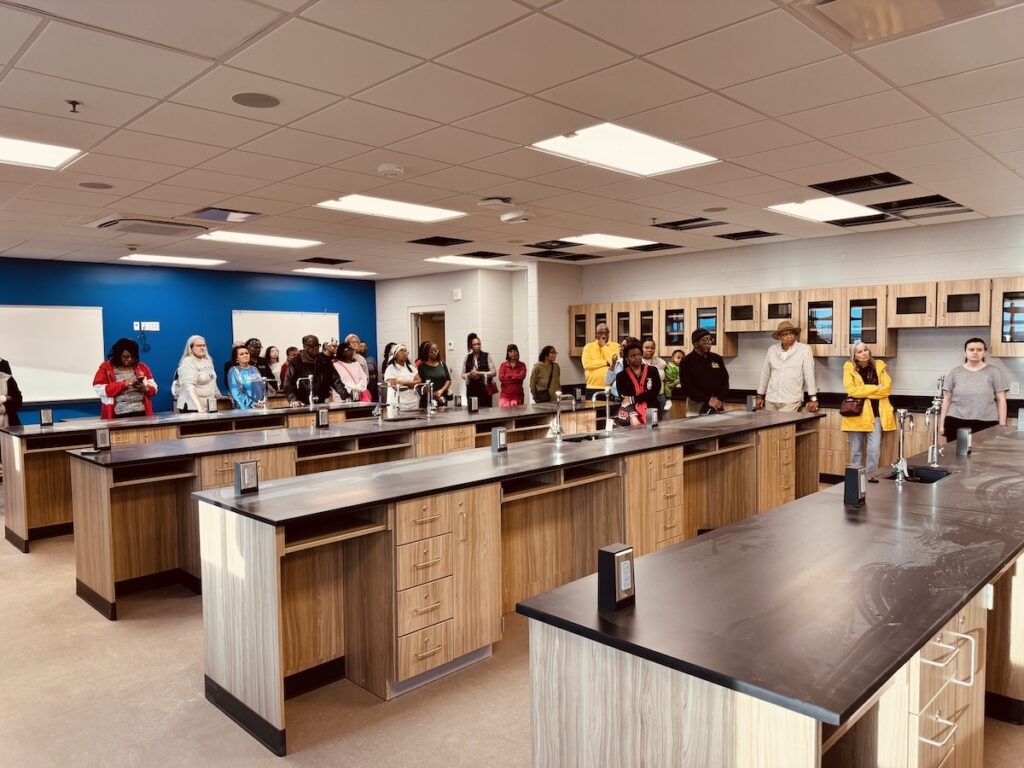
There are five media/library centers in the school — one in each academy and a large one near the main entrance that will be similar to a college bookstore with school shirts and swag for both students and the general public.
Makerspaces, which are sites for hands-on learning, often with 3D printers, are being considered for the four academy media/library centers, said Carver.
Main office and security
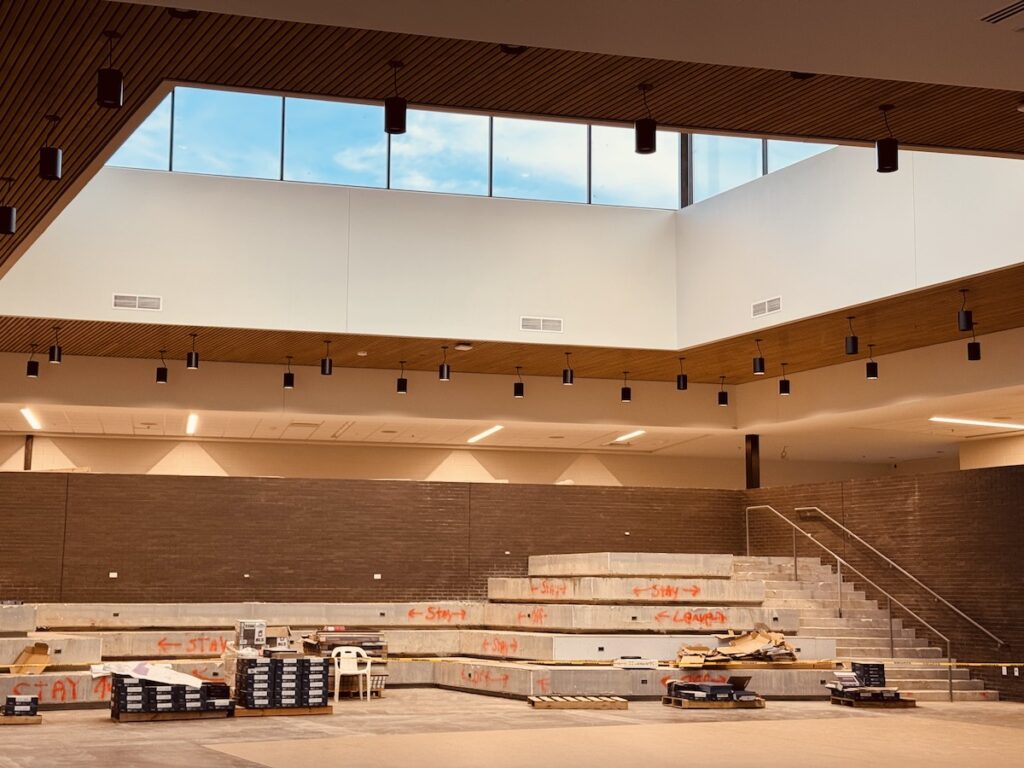
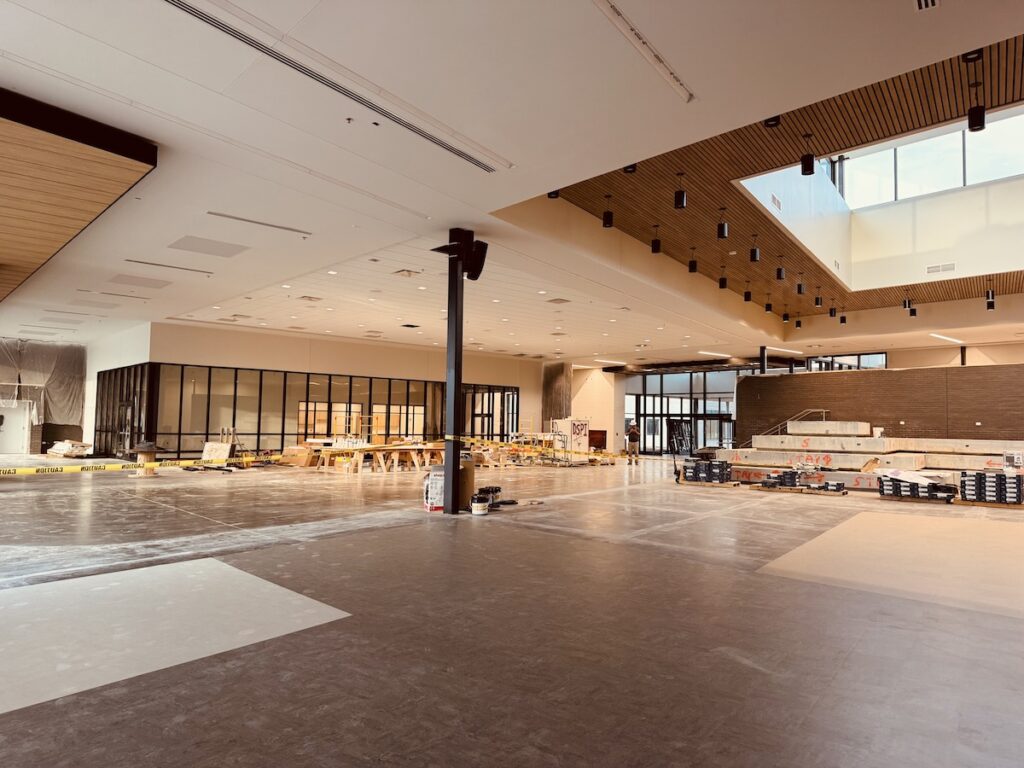
The main office, which faces Fort Campbell Boulevard, is located at the center of the four wings. It is adjacent to the cafeteria and a large gathering space with tiered seating under a huge skylight.
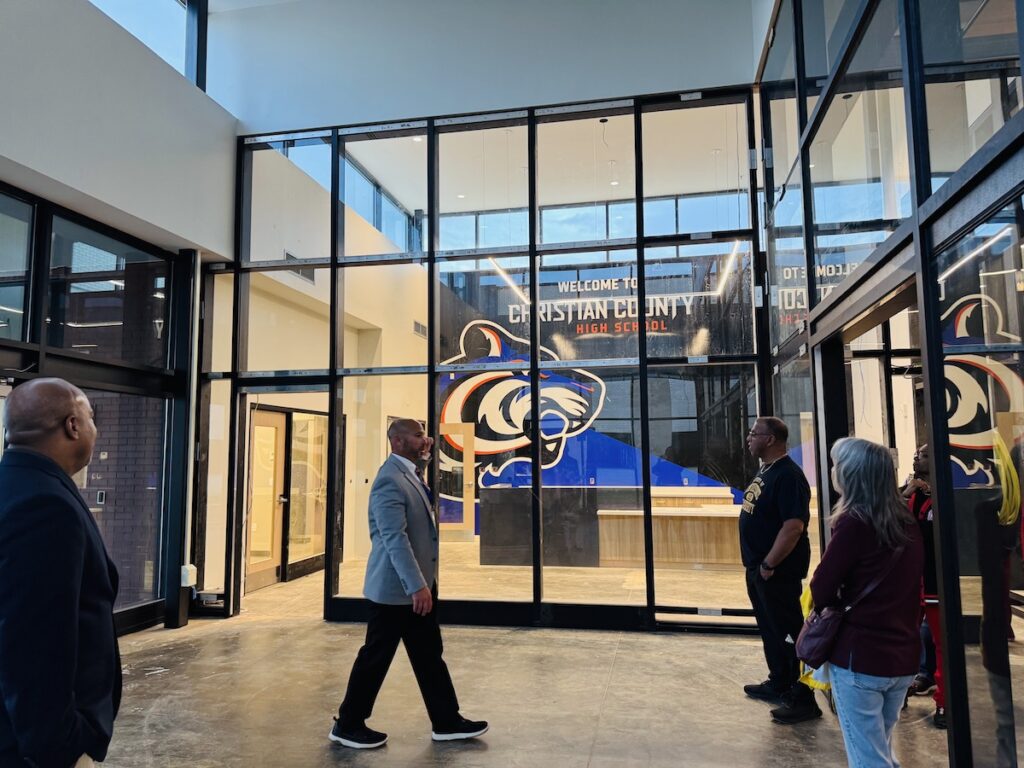
Weapon detectors will be located at all entrances. A visitor who comes to the front doors will first pass through a detector in the entrance lobby and then go into the office before being allowed through a third door into the main school. They would then go through additional secure points to enter an academy, said Carver.
Athletics
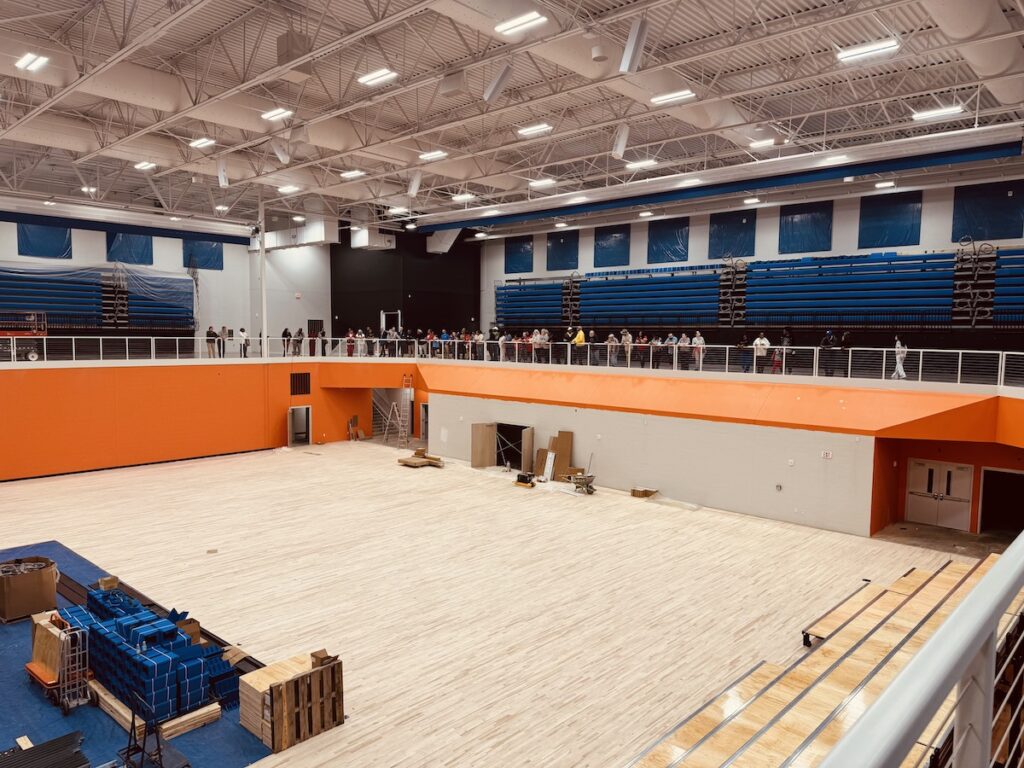
The school’s main gymnasium will seat 3,100 to 3,200 people and includes a section for students. Carver said the school will host the Region 2 basketball tournaments in 2027 and 2028.
The school mascot will be the Tiger (taken from Hopkinsville High School). The gym’s color scheme is mainly blue and orange, taking colors from both of the current high schools.
A hallway adjacent to the gym will serve as a Hall of Champions with photos and sports memorabilia from the schools that are merging into the new CCHS.
There is also a secondary gym, which will be a practice facility and serve as the school’s storm shelter.
Carver said the district anticipates the school’s marching band will have 200 members.
The soccer fields on the new campus will be ready for the fall season, and the baseball and softball fields will be finished for the spring season, said Carver. Football will remain at the Stadium of Champions at Eagle Way and LaFayette Road.
Opening ceremony
The district plans to have a ceremony to open the school several days before the start of the 2026-27 school year. It is tentatively scheduled for Aug. 6.

Jennifer P. Brown is co-founder, publisher and editor of Hoptown Chronicle. You can reach her at editor@hoptownchronicle.org. Brown was a reporter and editor at the Kentucky New Era, where she worked for 30 years. She is a co-chair of the national advisory board to the Institute for Rural Journalism and Community Issues, governing board past president for the Kentucky Historical Society, and co-founder of the Kentucky Open Government Coalition. She serves on the Hopkinsville History Foundation's board.