Dr. Terry Fuqua practiced medicine at his Hopkinsville office for nearly 40 years. The road to his choice of that profession began in first grade when he built a home chemistry lab.
“Every year my chemistry lab got bigger,” he recalls.
When he came to the realization that he wouldn’t be able to find employment as a chemist in Hopkinsville, he decided that medicine would be a close relative to chemistry.
He was born in Mayfield on April 30, 1938, and his family moved to Cadiz when he was a toddler. His parents invested in a funeral home in the early 1940s and subsequently bought out the other partners. His father went into the undertaking business and relocated to Hopkinsville in January of 1944.
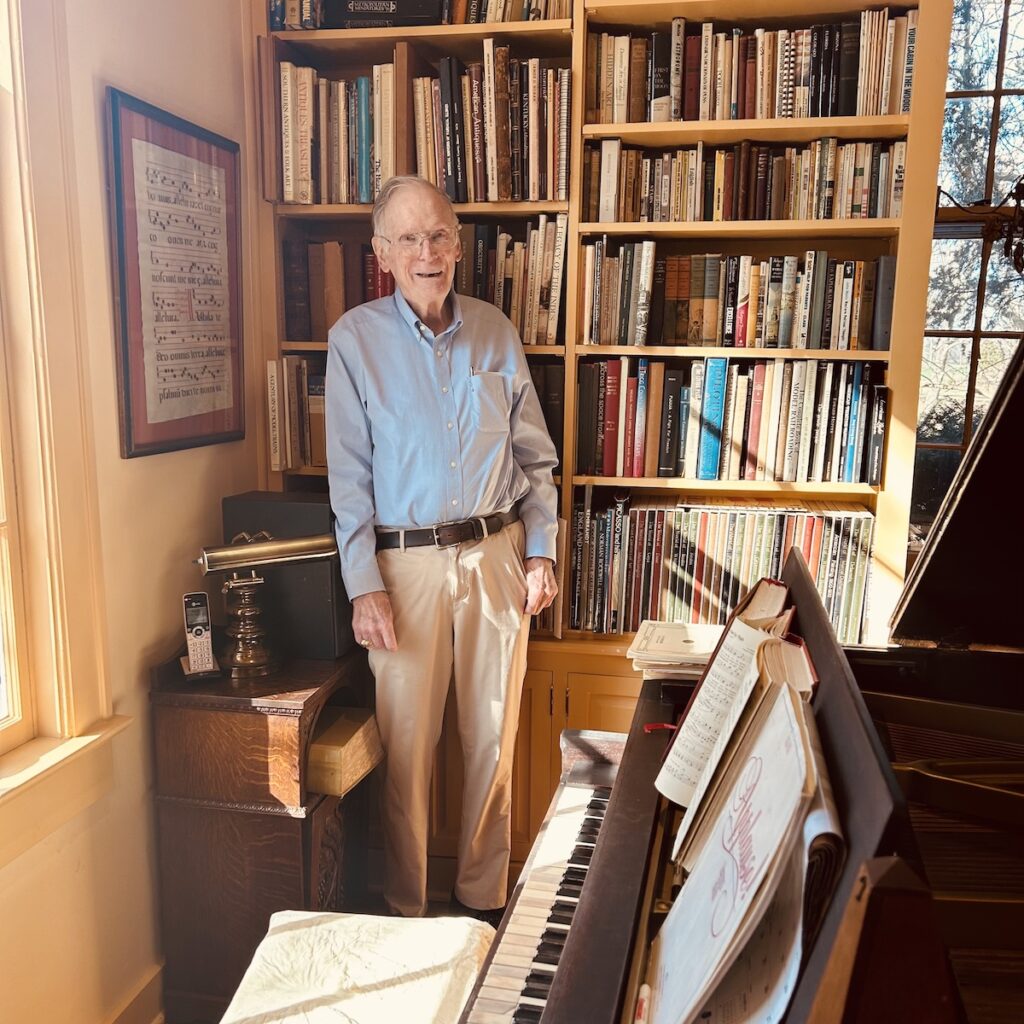
Fuqua still owns the house purchased by his parents on Cox Mill Road. His father passed away in his mid-50s from a heart attack. Fortunately, Fuqua’s mother, Carolyn Fuqua, already had studied for and acquired a license as a funeral home director. She continued to operate the funeral home for many years.
Fuqua earned his undergraduate degree from Vanderbilt University and then graduated from its Medical School in 1964.
While he was at Vanderbilt, he met his future wife, Nada, at one of the free Sunday suppers the First Baptist Church provided to college students. Nada, who was from Vandalia, Illinois, was attending Peabody College. The first time he met her, he asked how she spelled her first name (which is the same word for “nothing” in Spanish). He then proclaimed that “Nada means nothing to me.” That statement proved to be untrue. They were married in March of 1964.
Before he could begin his medical residency, Fuqua was drafted into the U.S. Navy as a doctor in 1965, during the Vietnam War, and served two years.
While he was out to sea, he usually was stationed on the main flagship. When he had to take care of patients on the other ships in the fleet, the method of transfer between ships was called a “highline.” A rope, to which a seat called a bosun’s chair was attached, was thrown between the ships and the doctor rode over the water to the other ship.
Because he had to perform his medical duties for only about an hour each day, Fuqua had plenty of time to pursue other activities and interests. He learned how radar works and studied the stars. He took movies with an 8mm camera of nearly every event that took place on the ship.
Fuqua had been interested in neurology as his chosen specialty, but the professor he had at Vanderbilt Medical School had left. He decided to change course and do his residency in internal medicine at Washington University in St. Louis, where Nada and he lived for three years. Their plan was to return to Hopkinsville after he completed his residency.
They moved to Hopkinsville in 1970, and Fuqua began his practice as a board-certified Internist in the Croft Building on South Main Street. He remained there until he retired in 2008. Fuqua had hoped to reach a 40-year medical practice milestone in Hopkinsville, but his long-time office manager had to retire and he decided to close the practice at that time.
He has fond memories of the people who worked with him over the years. While setting up his practice, he needed an office manager and a nurse. Wilma Chambers applied for the position. When Fuqua inquired about her nursing experience, she admitted that she had none but asked him if she could look around his office. He was so impressed by her knowledge of how the office should be arranged that he hired her on the spot.
Another employee was Gladys Tate, who came to Fuqua looking for work after her husband, Dr. L.A. Tate, died. She had no qualifications to be a nurse but said, “I will work for nothing. I just want to be a nurse.” Fuqua taught her about nursing. This included having her practice giving injections on a lemon. He agreed to pay her for work one day each week, but she came to the office every day to help out.
Among many interesting medical cases he handled, Fuqua recalls a patient he saw who had green-colored skin. He first encountered her at the Jennie Stuart emergency room, and when asked, she couldn’t explain why she was green. He saw her about two years later with the same coloring. Again, Fuqua was curious and sent a picture to a professor at Vanderbilt. The mystery was solved by the patient’s grandson, who said, “She drinks Chloraseptic all day.” Green dye is an ingredient in the over-the-counter throat medication.
When he was a resident at Washington University, a male patient’s symptoms included something similar to “raindrops on a dusty road” on his skin and “white dots on his fingernails.” Fuqua suggested that it might be arsenic poisoning, which it turned out to be. They discovered that the man’s wife was trying to poison him.
As busy as Fuqua was in his medical practice, it did not interfere with a wide range of other interests and activities. He and his wife loved bicycling and they often rode bikes together to surrounding towns.
When the weather permitted, his bike was his mode of transportation to and from work and also to go home for lunch. Two roundtrips a day was 10 miles total. He could be seen almost daily riding his bike on Main Street and Cox Mill Road.
In 2011, Fuqua had a serious bike accident when he was hit by a vehicle on Gary Lane. He suffered a broken leg and pelvis and dislocated elbow. He was hospitalized at Vanderbilt for a month, but that did not deter him from getting back on his bicycle as soon as he recovered.
Fuqua has been interested in genealogical connections since he was young. One of his mother’s cousins had written a book about the family genealogy. When Nada said that she did not know the names of her great-grandparents, he began the search. The pursuit included a trip to Scotland to look up ancestors.
He has completed more than 160 genealogies, many of which he did out of his own desire to learn more about the people around him.
Throughout his life, he has loved studying languages. His daughter Amy is a professor and Dean of Humanities at Black Hills State University in South Dakota. After he became intrigued with the Lakota Sioux language, he sat in on a class to study it at her college. The professor asked him to go to the reservation with him to help the Lakota people learn to speak their native language.
After his retirement, his wife was volunteering at Holiday Elementary School. He asked the principal Karen Shields how he could help, and she suggested that he tutor foreign students at the school in English. He tutored Japanese, Chinese and Spanish-speaking students.
One of the Japanese mothers who was assisting at the school asked Fuqua if he could help her with English. They began meeting during lunch break at school, and other Japanese parents soon joined them. The group then started meeting at the Fuquas’ home and has continued to gather every Tuesday from 10 to 11:30 a.m. He has had as many as 12 students at a time.
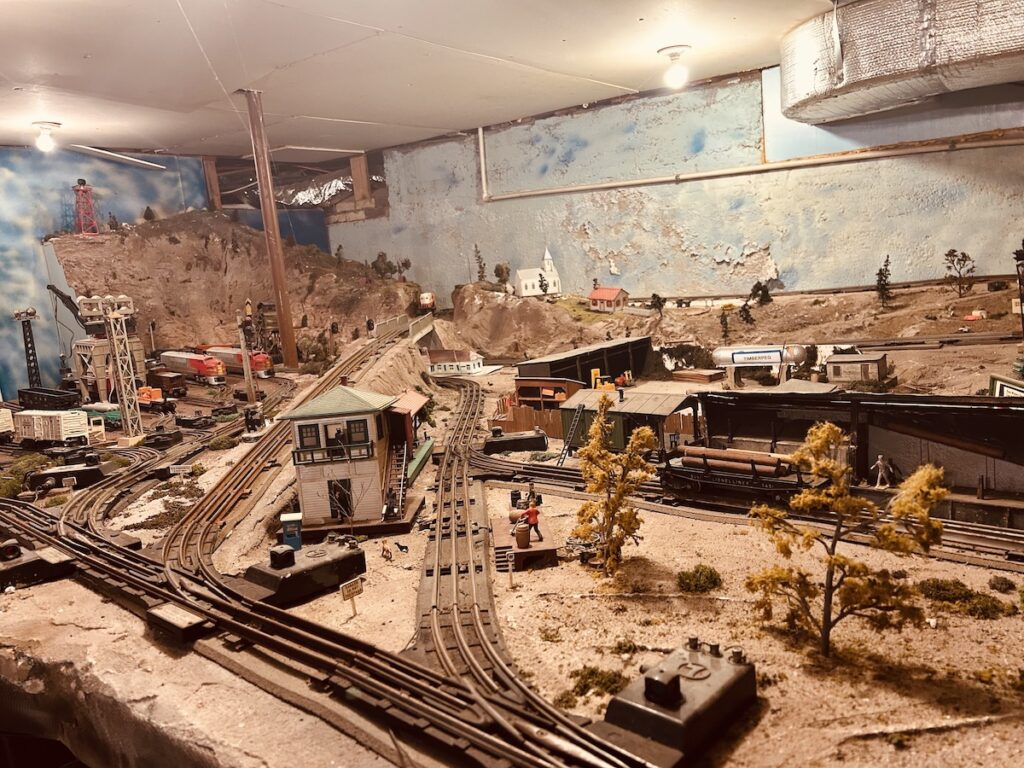
Another hobby, which brings a gleam to his eye, is his model train set in the basement of his house. He started making model train layouts when he was 5 years old and expanded upon it all during his youth. After he returned to Hopkinsville to practice medicine, he started rebuilding the railroad community in his basement, making it a project that has lasted a lifetime. It is quite an engineering feat.
A “Renaissance man” is described as a person who is well-rounded and skilled in many diverse fields, embodying the Renaissance ideal of humanism, with broad knowledge and proficiency in the arts, sciences, literature and physical activities, rather than specializing in one area.
Hopkinsville surely has one of its own.
Julia Crenshaw is an attorney at White, White & Crenshaw in Hopkinsville. She lives on a farm in Todd County with her husband John. They have two adult children and two grandchildren.