Sixteen pieces ranging in size from 2 ½ to 17 ½ inches tall comprise this collection. Made from cloth and decorated with sequins and beads where appropriate, the items have been constructed by hand and with such detail that it is difficult to take it all in.
The figures depicting people have embroidered faces that show expression, hair made of yarn, and garments elaborately designed. The animals — six in total — range in size and texture to complete this well-known and well-loved display. Separately, each character is impressive. When arranged together, they create a story of innocence and memory that transcends their individuality.
This month, we explore a Nativity scene.
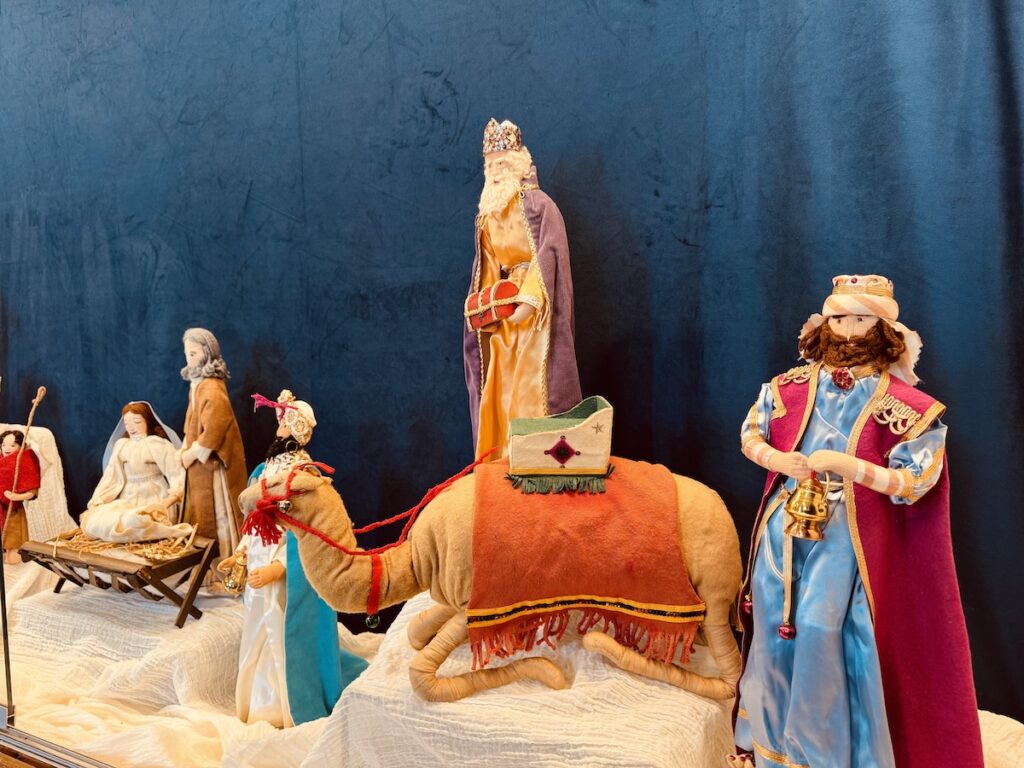
Katherine Miles, on behalf of the Pennyrile Doll Club, donated this stunning set of dolls to the Pennyroyal Area Museum in 1989. This handcrafted collection includes most of the usual characters in a nativity scene: Mary, Joseph, baby Jesus, shepherds, the Magi, a small flock of sheep and even a camel. Strangely, the scene is missing an angel, one of the most expected members of the Nativity.
Artistic depictions of the birth of Jesus date back to the earliest days of Christianity, but the first Nativity display is attributed to St. Francis of Assisi in 1223. Inspired by time spent in the Holy Land, St. Francis created a representation of Jesus’s birth in a cave outside of Greccio, Italy.
This earliest Nativity scene featured live animals surrounding the manger. Crowds gathered to witness this re-creation more than 800 years ago, and the people of Greccio continue the tradition with a live, historical reenactment each year.
Nativity scenes have long been one of the most pervasive symbols used as a reminder of the humble birth of Jesus as recorded in Biblical texts. From small, simple scenes to large yard displays, each comes with its own style and scale.
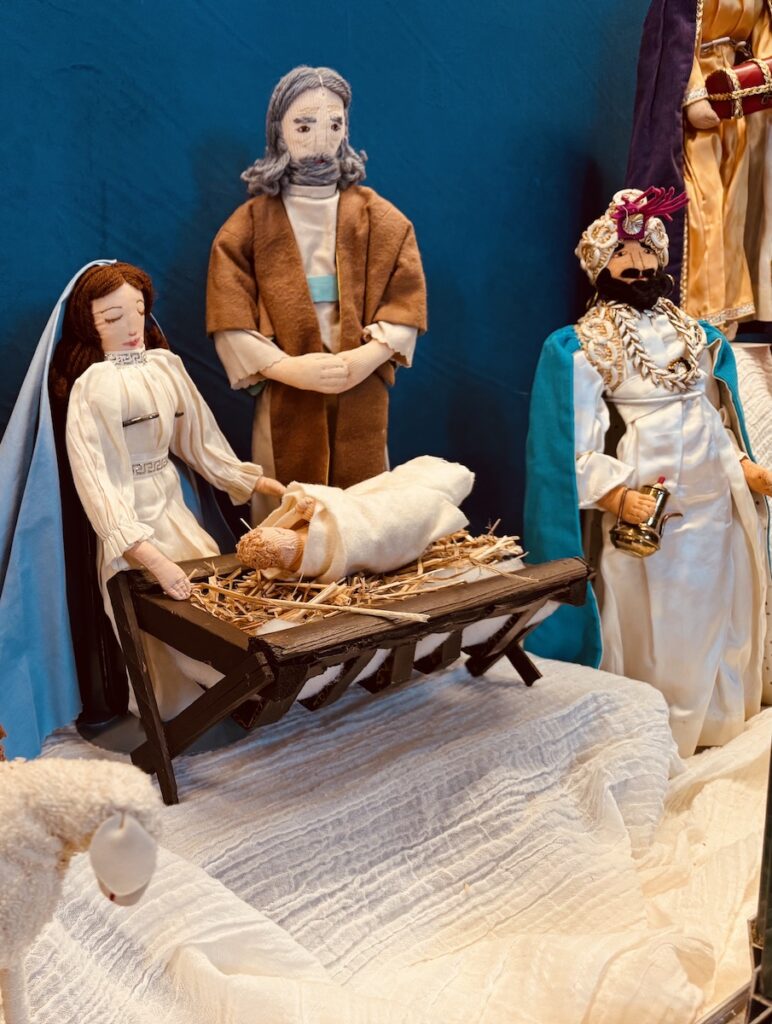
But few have captured my attention and imagination quite like this one. Each doll has its own personality brimming from the details that were sewn into the very fabric that created it. Most fascinating may be their hands — and their feet. Each doll’s hands and feet are stitched to make fingers and toes, respectively. Even little baby Jesus whose hands and feet are snuggly tucked in his swaddling clothes show this level of detail.
The small family that serves as the focal point of the scene are less exuberant than some of the other characters. Mary kneels with her embroidered eyes closed in reverence (or possibly exhaustion). She wears a white gown with silver trim and a blue head covering, and her feet are adorned with sandals. Joseph appears much older than Mary with a full head and beard of gray hair and wrinkles embroidered into his forehead. His long tunic is plain, but the fabric lining his robe is bright with stripes. Like Mary, Joseph wears sandals.
Baby Jesus has blue eyes and a head full of blonde curls, much like he is often depicted in Western culture. He lays in a manger made of wood and painted cardboard strips.
Three shepherds tend to a flock of four sheep. Two of the dolls portray grown men — each with a full beard created out of yarn — while one depicts a much younger herder. The young shepherd has long eyelashes and sandals that lace up to its knees. He is the only one in the scene who kneels with Mary. Each shepherd carries a hooked staff. Their tunics and wraps are patterned, but not flashy.
Their small flock of sheep includes a ram with horns, two ewes and two smaller lambs. They are all covered with a white terrycloth fabric that gives the animals texture and depth.
The Three Wise Men — the Magi — stand out as the flashy ones. They are kings, of course.
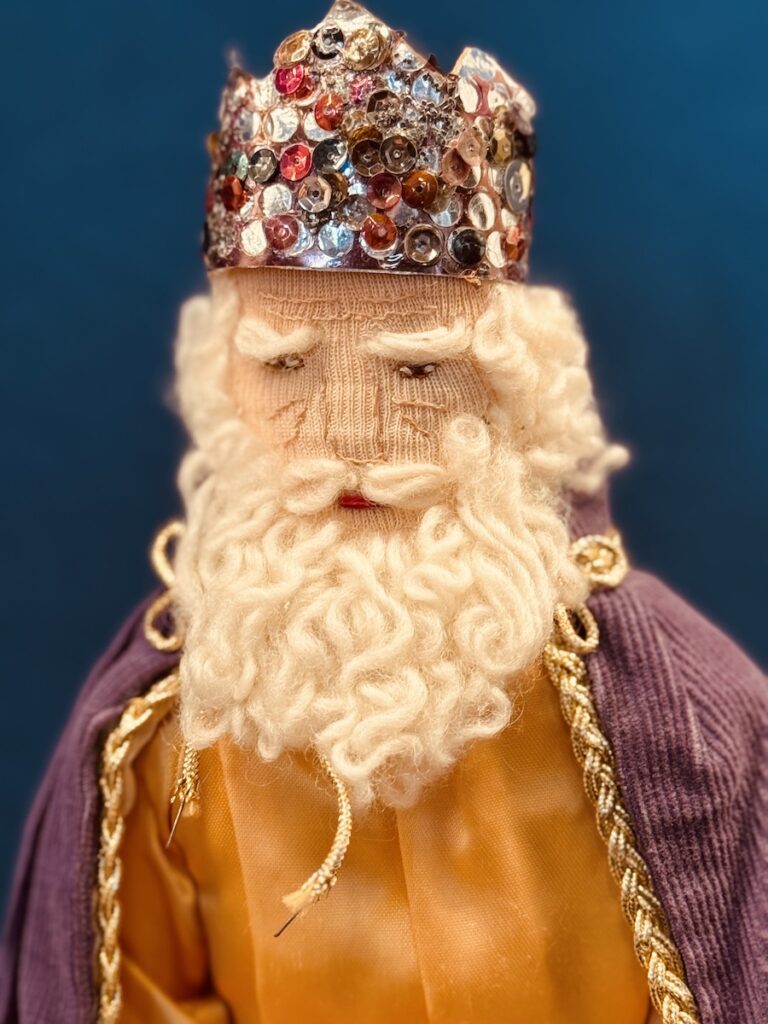
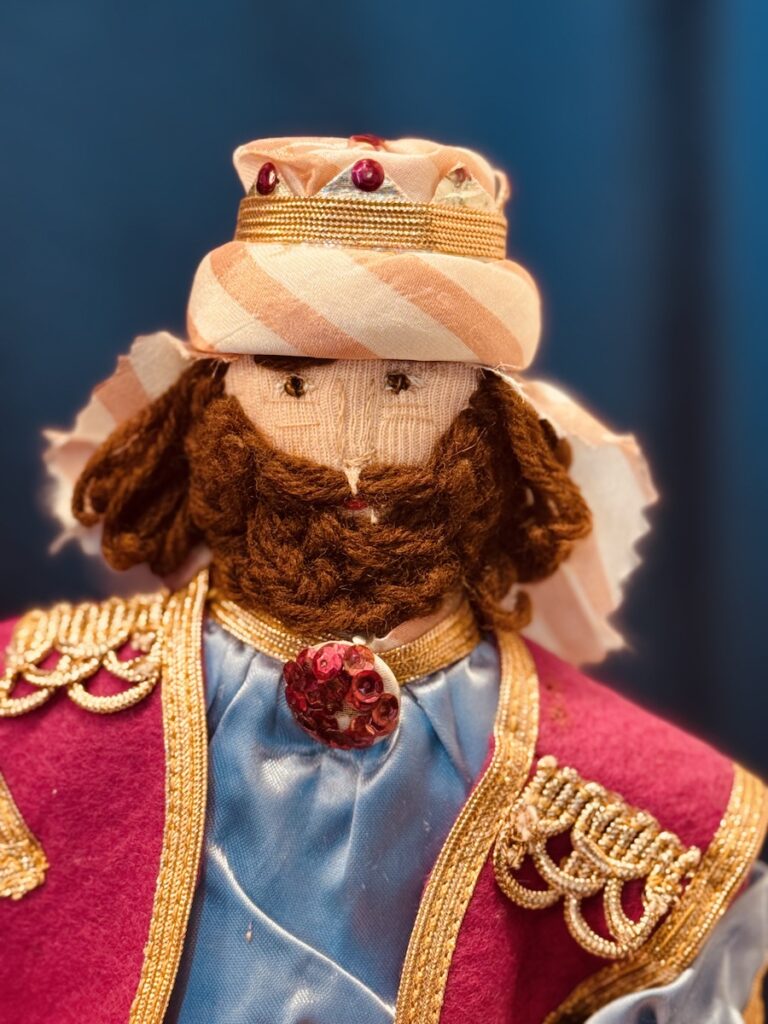
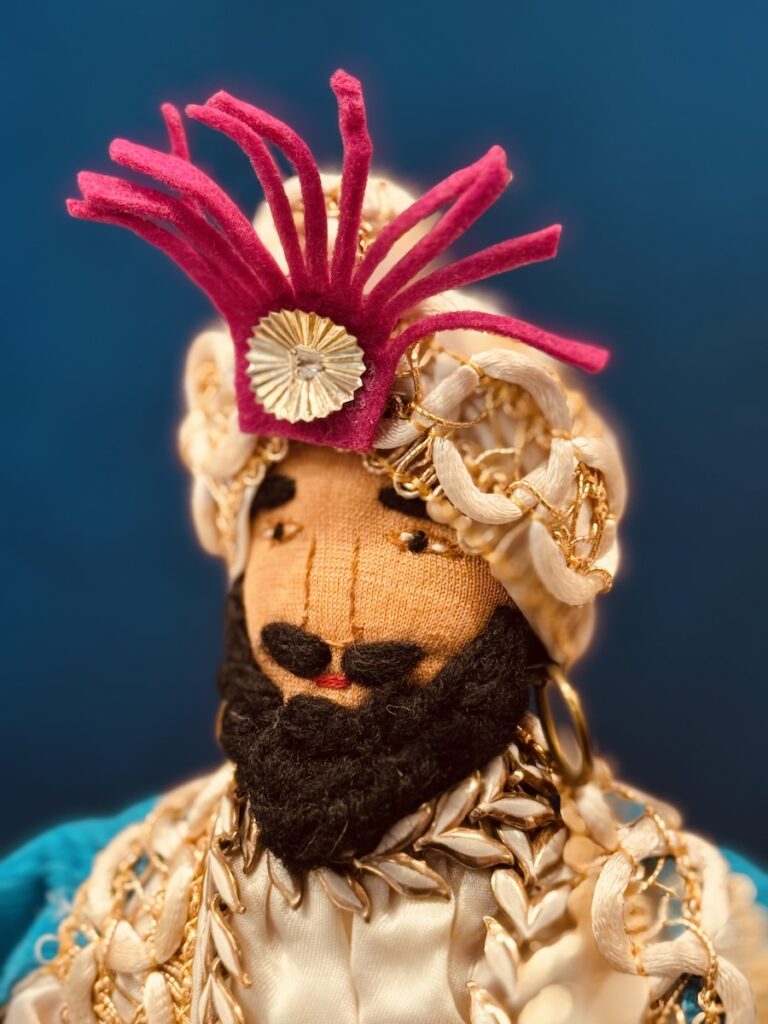
Their tunics are each made of shiny satins, and they wear robes of bright and rich tones. The linings of two of the robes feature contrasting, elegant fabrics, and all three sport gold trims and accessories. One even has earrings! A crown lined with aluminum foil and covered in sequins sits atop one king’s head, and another wears a turban with a bright pink flourish. And their shoes! No sandals for these men of distinction. They have on proper shoes made of leather and trimmed in embellishments. Each carries a vessel to represent the gold, frankincense and myrrh brought as gifts.
With the Magi is easily the most striking piece in the entire display: a camel. With hooded eyelids that make him look super sleepy, this figure measures 19 inches long and more than 10 inches tall. He has a bridle and reins made from yarn with bells by his ears and under his neck. A fringed blanket covers his back, and a small seat (seemingly too small for any of the Magi) sits on top of it. Like Mary and the young shepherd, the camel kneels. He is simply spectacular.
All told, the nine people, six animals, and one manger combine to create a unique, intricate work of art. Every bit of each piece is clearly handcrafted — from their clothes and shoes to their noses and toes.
But handcrafted … by whom?
Oh, how I wish I could share a definitive answer to that question. The set came to the museum as a donation from the Pennyrile Doll Club. Organized in 1979, the club joined the United Federation of Doll Clubs Inc. the following year.
Its members were described as “a dedicated group of ladies who devote such effort to keep their childhood alive and to preserve their knowledge and love of dolls for prosperity” in a 1998 article in the Kentucky New Era.
The Pennyrile Doll Club participated in regional and national conventions and hosted local displays at the Cayce-Yost, the Pennyrile Mall, and the Pennyroyal Area Museum. The club continues to meet monthly — celebrating its 45th year this past August.
But none of my research indicates that these devoted doll collectors actually made dolls, leaving us with a Christmas mystery.
In some way, I think that this mystery enhances the beauty and meaning of this collection. Without knowing the maker, we are left to focus on the details in each piece that create a story of humility, hope and love.
(Visitors to the Pennyroyal Area Museum will find the Nativity in the front lobby.)

Alissa Keller is the executive director of the Museums of Historic Hopkinsville-Christian County. She’s a graduate of Centre College with degrees in history and English and of Clemson University/College of Charleston with a master’s degree in historic preservation. She serves on the Kentucky Historical Society and the Kentucky Museum and Heritage Alliance boards.