As I sat down to meet with Tammy Stratton at a coffee shop to learn more about her commitment to bettering the lives of animals through Max’s Hope Pet Rescue, I soon learned that the message on the T-shirt she wore, “Treat Dealer,” explained a lot about her approach to caring for animals. She said her daughter Danielle gave her the shirt for Mother’s Day this year.
Stratton’s background provides insight into her love and respect for animals. She was born and raised in Christian County. She says her attachment to animals is an inherited trait from her parents. Her father, Walter Moore, who served in the U.S. Army and retired to this area from Fort Campbell, set the example. The family always had dogs, cats, chickens and other animals. She got her first pony when she was 4 years old.
Her dad nursed motherless baby squirrels and tended to a hurt possum and other wild animals on their farm. Her mother raised poodles for sale but discontinued that breeding business because she worried about where the puppies were being sent.
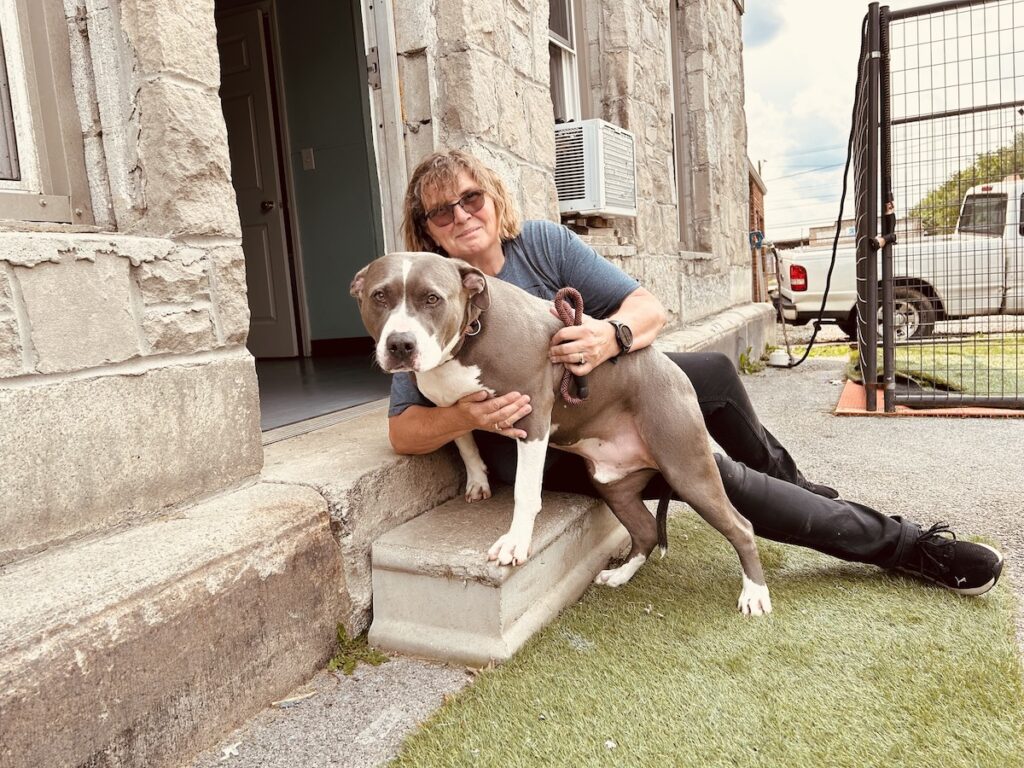
Stratton has passed on the family’s love for animals to her children. One of her daughters is a veterinarian and another daughter owns a pet grooming business.
Stratton believes her father’s compassion and concern for stray and abandoned animals traces to his childhood in New Jersey. His father died when he was young and he was left without a stable home life. He wandered the streets until a foster family took him in. Because he once lived like a “stray,” she saw his efforts in caring for animals as “his way of paying back.”
Stratton was an aide in the nursing department at Western State Hospital for 25 years and retired in 2015. By that time, she had become a full-time animal rescuer. She volunteered for the Christian County Humane Society for some time.
On March 3, 2011, she found herself caring for four abandoned puppies and needed help with some of their medical issues. After she took one of them to be examined by Dr. Mike Johnson at Mansfield Animal Hospital in Hopkinsville, he told her, “Now you are a rescuer.”
A rescue mission
That’s when Stratton embarked on her new avocation, which resulted in the formation of Max’s Hope Pet Rescue Inc., a nonprofit organization with a 501(c)(3) designation. The name comes from her dog, Max, a stray German Shepherd that showed up at her house when he was 6 years old. She described Max as her “soul dog.” He died in 2011.
Taking in stray and unwanted animals and finding homes for them is the main purpose of Max’s Hope, said Stratton.
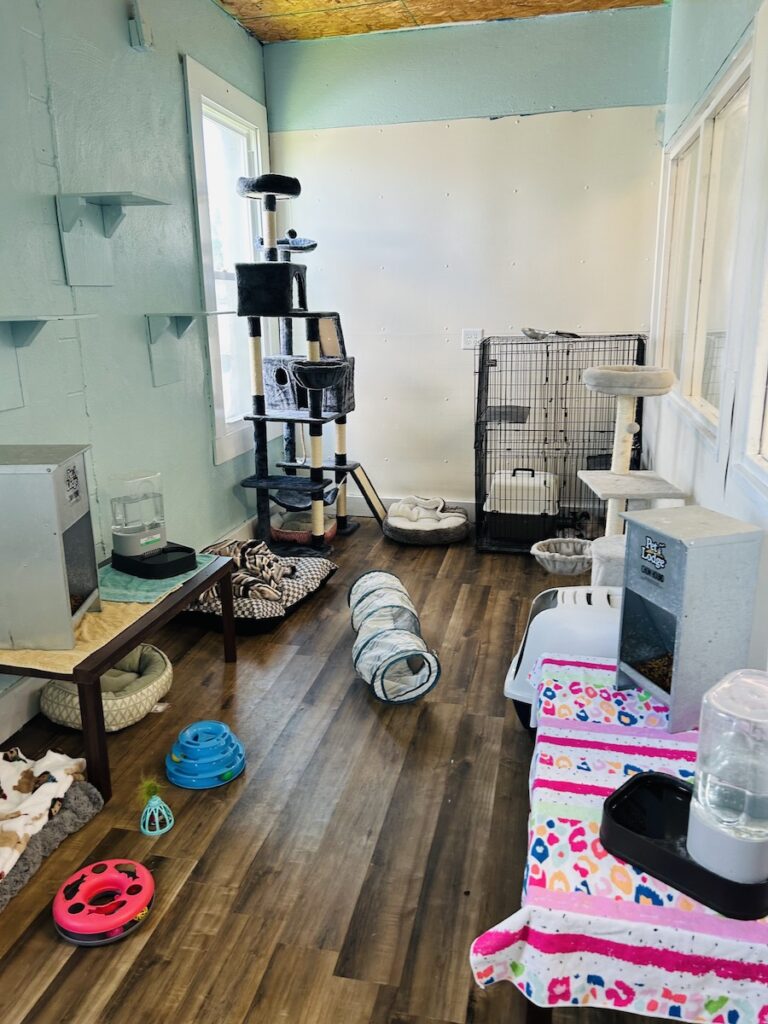
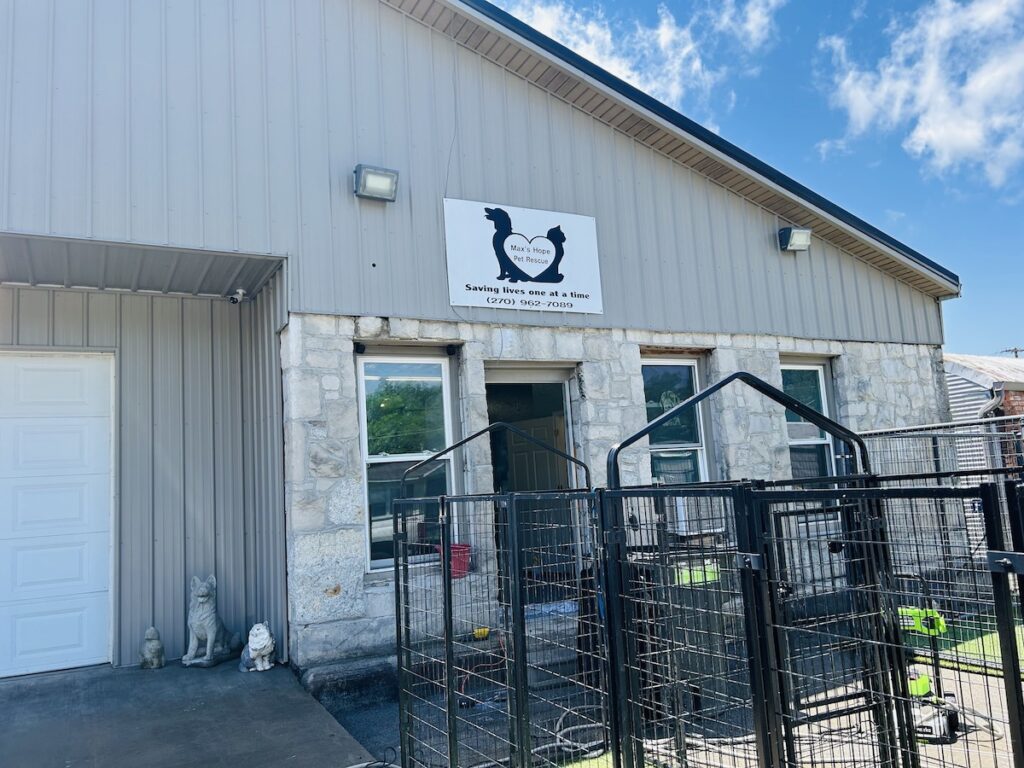
Johnson, the veterinarian who first asserted that Stratton was a rescuer, helped the organization with one of its most crucial needs. He owned a large building behind his practice and offered to let Max’s Hope use a portion of it to house the animals at no charge. The facility holds up to 25 dogs and cats and underwent renovations in May.
Stratton showed me some of the upgrades to the cat room and the individual rooms for the dogs. They installed new, stronger doors on the dog rooms to protect them from being damaged or destroyed by the dogs.
Max’s Hope is operated by its Board of Directors. There are no paid employees. Volunteers are responsible for the rescue, care and placement of the animals. All financial support for the operations is through charitable donations.
Johnson and his staff, including Dr. Lindsey Dunn, provide the triage services for the stray or abandoned dogs and cats before they enter the shelter. They give them a full check-up and provide spay and neuter services to all of the animals at 6 months old. Stratton is a “firm believer in decreasing the dog and cat population” through spay and neuter programs because there are “so many unwanted pets.”
The objective for every animal at Max’s Hope is to match each one with an appropriate owner to adopt them. When a prospective adopter approaches Max’s Hope, they are asked many questions, including whether they have small children or other pets, whether they have a fenced-in yard and what their “dog handling skills are.” They have to submit one personal reference.
Max’s Hope will inquire about the adopter’s prior history with keeping pets up to date on vaccinations and other medications and will verify the information with the veterinarian. The facility will offer a trial period for the pet to live in the new home if they have other pets or the adoptive pet has some behavioral issues.
Max’s Hope successfully placed 288 animals with owners in 2024, and Stratton described that as a typical year. However, she has noticed over the last three or four years that the number of returns of animals to the facility has increased somewhat. The returns mostly are puppies, and adopters need to understand that it takes time and effort to train a puppy, she said.
I spoke with Johnson about the additional services Stratton has brought to this community to help rescue animals and strays. He described “rescue” animals as “those animals that are sick or injured and don’t have anyone to care for them.” Not only does Max’s Hope tend to the rescue animals but it also takes in otherwise healthy stray animals that have been abandoned by their owners.
Johnson explained that the high number of stray pets in our area probably is due to the financial burden of caring for pets and the relocation of military members who cannot find people to take their pets. He agrees wholeheartedly with the Stratton’s goal of spaying and neutering as many pets as possible.
He said that the difference that Ms. Stratton and Max’s Hope have brought to this community is that they “don’t decline to treat an animal because they are in such bad shape.” She doesn’t just pay lip service to the idea of caring for animals but actually “picks up dogs that are abandoned or have behavioral issues” and continues to care for them even if she can’t find an adoptive home. She is reluctant to send them to the animal shelter for fear that they will not be adopted.
Caring for animals through disaster & disease
In addition to running the Max’s Hope facility, Stratton has been employed at The Pet Lodge for nine years and has been the manager there for the past three years. Many saw the posts on social media about her efforts to save the dogs and cats at the boarding facility during the flooding in early April.
She and others paddled boats to the building that housed the animals and were able to rescue 39 of the 40 dogs and both of the cats in the building. She described the situation as harrowing since the water had risen in the building above the animals’ heads. They all were swimming.
Although hundreds of dogs and cats have been cared for at Max’s Hope, Stratton said that “every one of the pets means something to me.” She mentioned some of the animals that have benefitted from the services at Max’s Hope. One dog that has her heart is a female Rottweiler named Sparky who has been at the facility for seven years. They cannot find a home for her because of her high energy level.
“Dogs understand that some environments are not good for them,” said Stratton.
She also talked about an old male cat named Grandpa. There are around seven to 10 cats usually kept in the cat room. They would let Grandpa roam around the shelter, and he would greet them at the door.
They have also cared for animals diagnosed with cancer. She tearfully described the impact of cancer on animals and explained that dogs don’t understand what cancer is or why they hurt. One dog that was treated for cancer at Max’s Hope is a male pit bull named Snoopy that she has nicknamed Blue Hippopotamus because he is short and wide. He received chemo pills for nine months and became cancer-free. Then his hair started falling out and Johnson’s clinic discovered that the chemo treatment had caused a thyroid problem.
A Shepherd-Lab mix dog named Gerald arrived when he was 9 years old. He stayed at the rescue facility for six years but has been placed with a family for three years. She mentioned another dog named Benji that recently was returned to the shelter after living with an adoptive parent for three years.
Stratton emphasized that there are a significant number of local people who contribute to carrying out the goals of lowering the dog and cat population and providing care to animals that are sick, injured or abandoned. She talked about her friend Susie Thieke, whom she calls the “cat trapping lady.” She catches feral cats all over Hopkinsville so that they can be spayed or neutered.
She touts the efforts of Lynn Hazelrigg, who is on the Max’s Hope Board. At her farm in Christian County, Hazelrigg, a wildlife rehabilitator, has created a sanctuary for all types of animals in need of a place to live.
Most of all, Stratton is grateful for Johnson, Dunn and the other Mansfield Animal Hospital staff, and “the volunteers and community supporters, without whom we would not have survived.”
“In our community, so generous, if we put out a plea for help, they will respond,” she said.
Stratton has spent a considerable amount of time studying dog behaviors and trying to find ways to help the more difficult behavioral cases. She calls herself a “forever learner” and quotes her dad, who said, “Everybody learns something until the day you die.”
She has followed that mantra in ascertaining that dogs need to be challenged “to be all they can be.” She would like to develop a pet enrichment center to stimulate the animals’ brains by having them work puzzles and play in a pit full of balls.
Stratton offers advice about the steps to take when finding a stray pet. She explained that under Kentucky law, animals are the possessions of their owners. If anyone finds a pet on the loose, they should try to locate the owner. One step is to contact animal control and the Christian County Animal Shelter. There also are a number of social media sites that post information about missing pets, including Moving Mountains, Safe Haven and the Humane Society.
On a recent Saturday, the Christian County Animal Shelter called for help with three mature cats because an elderly owner could no longer care for them. Stratton picked them up and took them to Max’s Hope. That rescue is just one example of the many ways Stratton and others working at Max’s Hope are dedicated to looking out for the welfare of our community’s furry friends.
Julia Crenshaw is an attorney at White, White & Crenshaw in Hopkinsville. She lives on a farm in Todd County with her husband John. They have two adult children and two grandchildren.