FRANKFORT — The state House approved a bill that would opt Kentucky into a federal education tax credit program established by the One Big Beautiful Bill Act.
House Bill 1 passed largely along party lines Tuesday afternoon with a vote of 79-17 with Rep. Kim Banta, R-Fort Mitchell, abstaining. The floor vote was taken a couple hours after the bill was approved by the House Appropriations and Revenue Committee and less than a week after the bill was filed.
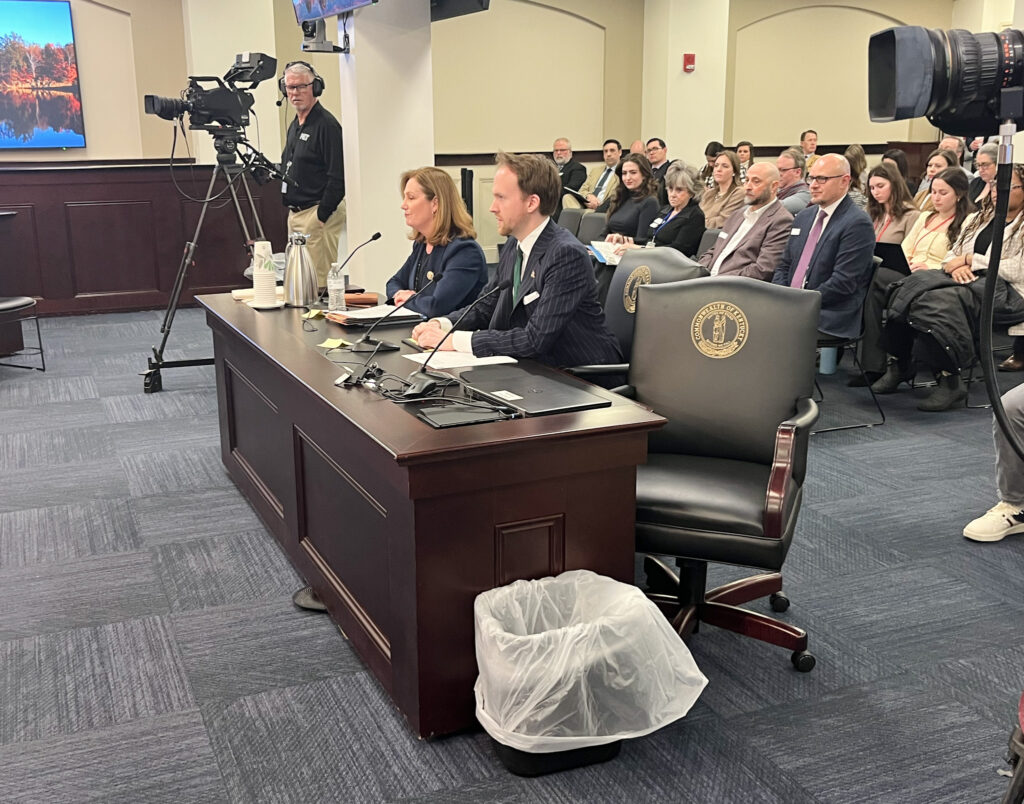
“You’re going to pay the money anyway, so it’s your choice — either pay the federal government or bring the money home to Kentucky students,” said the bill’s primary sponsor, Rep. Kim Moser, R-Taylor Mill.
Some critics argued HB 1 is a way to support “school choice” options — at the expense of public schools — despite rejections by Kentucky voters and the state Supreme Court. However, House Republicans say the bill would allow K-12 students and their families to benefit from a federal tax credit — at no cost to the state.
Moser and fellow GOP lawmakers House Speaker David Osborne, of Prospect, and Rep. TJ Roberts, of Burlington, filed House Bill 1 Thursday, hours after all seven justices on the Kentucky Supreme Court struck down a 2022 charter school law.
If HB 1 gains approval from the Senate, it would allow Kentucky K-12 students to receive tuition and other education assistance funded by donations from people receiving the federal tax credit that will become available in 2027. It would also allow the state to identify eligible scholarship granting organizations (SGO), which could include public schools that create an SGO. The tax credit is up to $1,700 per year for people who donate to SGOs, which would give the money to eligible students through scholarships.
The program would be overseen by the Kentucky secretary of state, who is currently Republican Michael Adams. His office would report to the U.S. Treasury about the state’s participation in the federal tax credit.
Both the Kentucky House and Senate have Republican supermajorities.
Casting votes
During the floor debate, House Democrats decried the speed at which the bill was considered and took issue with personal attacks against Gov. Andy Beshear, a Democrat who often touts his support for public education. He opposed the 2024 constitutional amendment.
Roberts said in response to a question that Beshear had a “magnificent case of Trump derangement syndrome” and would not oversee the program. Roberts added that was part of the reason the bill gives the secretary of state oversight.
“He’s openly hostile that anyone but the super wealthy have the opportunity to send their kids to the school that best serves their interests,” Roberts said of Beshear. “It’s interesting coming from a guy who himself went to private schools as a result of his own platinum spoon that he was born with in his mouth.”
House Democratic Caucus Chair Lindsey Burke, of Lexington, said she ultimately voted against the bill because of the rhetoric used by Republicans against Beshear. She said that she could have supported parts of the bill.
“It was the attacks on our governor combined with the terrible procedure that put me in the stance where I’m voting no,” Burke said, and added that Beshear graduated from a public high school and a public university.
Beshear holds degrees from the University of Virginia, a public university, and Vanderbilt University, which is private.
However, two Democrats ultimately voted for the bill, Rep. Tina Bojanowski, of Louisville, and Matt Lehman, of Newport. Bojanowski, a public school teacher in Jefferson County, flipped her vote back and forth for a few minutes while other lawmakers explained their support or disapproval.
“It’s a really, really hard vote for me, but I believe with my heart and soul this will help public education students, and so I’m going to stick with the yes, because I’m going to do everything that I can to ensure that we have scholarship training organizations that help public education students and students with disabilities,” Bojankowski said. She earlier in the debate urged advocates o find someone to create a SGO for public schools.
Louisville Democrat Rep. Al Gentry decided to not cast a vote at all. He pointed out that some floor amendments had been filed Tuesday, but did not have enough time to be considered by the body.
“I will choose today to not participate on this bill. I’m sure it will move forward,” Gentry said. It’s just something that I decided I’m tired of participating in processes like this when we could have easily ran this bill tomorrow.”
In response to criticism of the speed of the legislative process, Rep. James Tipton, R-Taylorsville, said “I keep up with what’s going on in Washington, DC,” so he was aware of the tax credit before the state’s legislative session began and that a similar bill had been filed by Roberts.
“I get so frustrated that when it comes to issues like this, they get so partisan,” Tipton said. “My heart’s about our children in this state and their future, and I want every child to have the best opportunity they can, whether they attend a public school, private school or whether their parents choose to homeschool.”
Osborne told reporters after the House adjourned that he did not think Republicans moved too fast on the bill. He referred to a similar bill from Roberts, which was filed during the second week of the legislative session.
“Everybody in here knew what that bill did, and so any insinuation that it was used to cover up or anything like that is political theater,” Osborne said.
Before the House’s approval
Kentucky Democrats were critical of the legislation shortly after it was filed last week. Several pointed to the defeat of a 2024 constitutional amendment that would have allowed the General Assembly to fund nonpublic schools with state dollars.
“This is not only an insult to Kentucky families getting priced out of health care and basic necessities — it’s further proof that the Republican Party would rather build exclusive private schools for the wealthiest families than work with Democrats to improve schools serving nearly all Kentucky children,” said Kentucky Democratic Party Chairman Colmon Elridge in a statement.
- SUBSCRIBE: Sign up for our newsletters
During the House A&R meeting Tuesday, three Democrats passed giving votes on the bill. House Minority Floor Leader Pamela Stevenson, a Louisville Democrat, voted against the bill.
Sixteen Republicans voted for HB 1. Banta also abstained from voting during the meeting.
Some conservative groups have praised the legislation. Commonwealth Policy Center Executive Director Richard Nelson said in a statement the bill “would empower parents with resources to help with their children’s educational needs and it couldn’t have come at a better time.”
“In light of the recent Kentucky Supreme Court ruling that struck down the state’s charter school funding law, HB 1 provides a constitutionally sound mechanism to expand options for parents without diverting Kentucky tax dollars from the state’s ‘common schools,’” Nelson continued.
The U.S. Treasury and Department of Education said last month that 23 states had opted-in to the federal tax credit, including Kentucky neighbors Indiana, Missouri, Ohio, Tennessee, Virginia and West Virginia.
House Bill 1 now goes to the Senate for further consideration.
This story has been updated with additional information.
This article is republished under a Creative Commons license from Kentucky Lantern, which is part of States Newsroom, a network of news bureaus supported by grants and a coalition of donors as a 501c(3) public charity. Kentucky Lantern maintains editorial independence. Contact Editor Jamie Lucke for questions: info@kentuckylantern.com. Follow Kentucky Lantern on Facebook and Twitter.

McKenna Horsley covers state politics for the Kentucky Lantern. She previously worked for newspapers in Huntington, West Virginia, and Frankfort, Kentucky. She is from northeastern Kentucky.