Cuts to public broadcasting that cleared Congress early Friday morning will cost KET funding for most of its original programming and a fourth of its workforce, said the head of Kentucky’s statewide public television network.
“KET has begun the difficult process of determining what must be reduced, suspended or ended due to the significant loss of CPB funding,” said Shae Hopkins, KET executive director and CEO, in a release Friday afternoon.
Republican President Donald Trump pushed Congress to end funding for the Corporation for Public Broadcasting, or CPB, including rescinding more than $1 billion that Congress already had approved.
Hopkins said $4.2 million from the Corporation for Public Broadcasting has paid for “the majority of KET’s productions and 25% of KET’s total workforce.”
“For nearly 55 years, CPB funding has been the primary source of support for KET’s local productions and related services,” said the release.
Kentucky’s lone Democrat in Congress, U.S. Rep. Morgan McGarvey of Louisville, was the only member of the state’s delegation to vote against the measure.
Republican U.S. Reps. Andy Barr, James Comer, Brett Guthrie, Thomas Massie and Hal Rogers voted in favor of $9 billion in cuts, most of which came from foreign aid.
U.S. Sens. Mitch McConnell and Rand Paul approved the bill when the Senate passed the rescissions package Thursday, ahead of a Friday deadline.
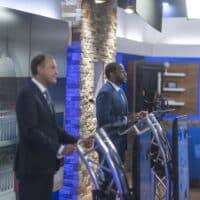
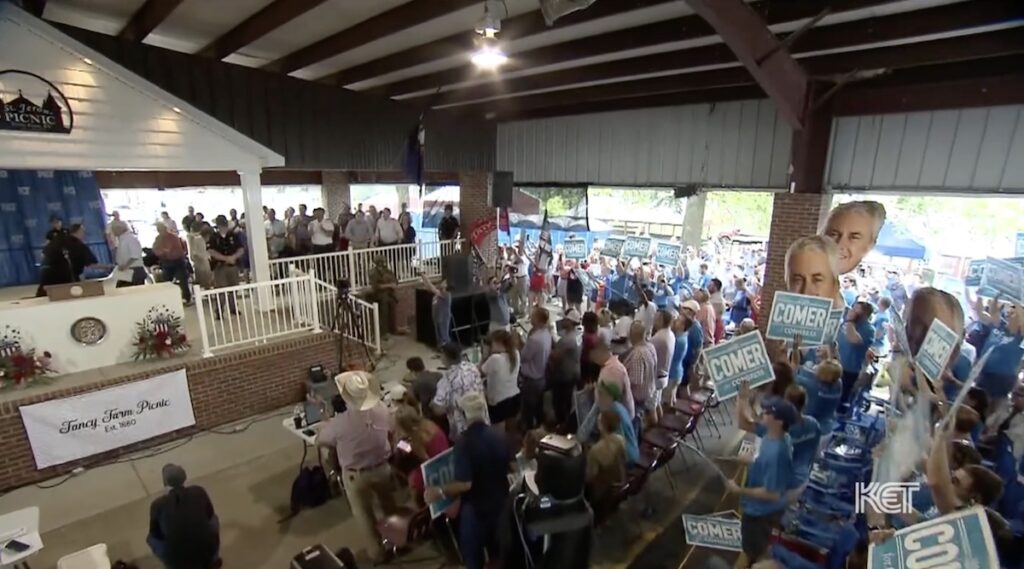
One cost-cutting step KET already has taken is canceling its coverage of this year’s annual Fancy Farm Picnic in West Kentucky next month. The gathering typically brings the state’s high-profile elected officials and candidates together in front of a crowd. KET’s coverage included broadcasting their speeches statewide.
KET’s Hopkins said: “While extremely disappointed, we are heartened by the outpouring of support from across the Commonwealth. And although we know there are changes to come, KET remains steadfastly committed to the people of Kentucky and providing trusted, educational programs and services.” come
The federal funding cuts will also affect public radio stations across the country. Louisville Public Media sent an email to supporters Friday morning that said the bill cuts “$376,000 from our budget TODAY.” The money funded local journalism, emergency alert systems during storms and cultural programming.
“This final vote effectively ends federal funding for LPM, our sister stations throughout Kentucky and the public media system nationwide — after bipartisan support for almost 60 years,” the email said. “But this will not be the end of Louisville Public Media.”
LPM and its sister outlets are collecting donations from supporters in hopes of making up for the loss of the federal funding.
Some Kentucky Democrats slammed the public media cuts. McGarvey said on X ahead of the House vote that “public broadcasting saves lives.”
“I’m voting no, and every House Republican who’s ever claimed to care about rural Americans should too,” he said.
Cherlynn Stevenson, a candidate in the 6th Congressional District, said in a statement that the decision by Republicans in Congress to cut public media is “a shameful and reckless move that will leave rural Kentuckians across our Commonwealth in the literal dark.” Stevenson is a former Kentucky House Democratic caucus chair.
“When natural disasters strike — like the devastating floods and tornadoes that have wreaked havoc on our communities — Kentucky families rely on life-saving weather alerts through public radio,” Stevenson said. “And when private radio towers are unusable, first responders depend on public radio towers to communicate with one another.”
This article is republished under a Creative Commons license from Kentucky Lantern, which is part of States Newsroom, a network of news bureaus supported by grants and a coalition of donors as a 501c(3) public charity. Kentucky Lantern maintains editorial independence. Contact Editor Jamie Lucke for questions: info@kentuckylantern.com. Follow Kentucky Lantern on Facebook and Twitter.

McKenna Horsley covers state politics for the Kentucky Lantern. She previously worked for newspapers in Huntington, West Virginia, and Frankfort, Kentucky. She is from northeastern Kentucky.