For I ken masel’ by the queer-like smell
That the next stop’s Kirkaddy!
These lines conclude Mary Campbell Smith’s 1913 poem “The Boy in the Train.” (Smith wrote the poem in Scots, the official language of Scotland, which explains why you may not recognize some of the words.) At the end of the poem, the boy on the train knows he has reached the industrial city Kirkcaldy because of the “queer-like smell” of the linoleum factories.
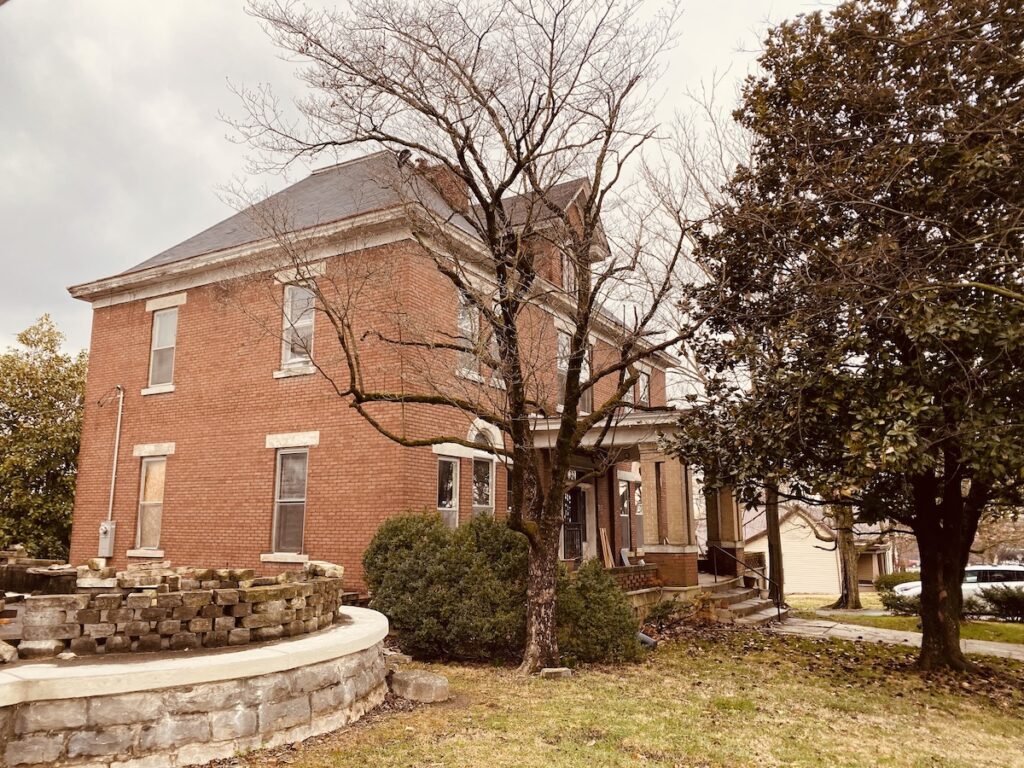
Linoleum, the middle child of flooring products, has a hard time living up to stately hardwood, durable tile, and elegant carpet. But some of the best things I’ve found in the Dalton house are scraps of old linoleum. I think this historic household material deserves a second look and a little time in the limelight.
Kirkcaldy
You can’t talk about the history of linoleum without talking about Scotland.
Kirkcaldy, Scotland, was the linoleum capital of the world by the late 1800s. Kirkcaldy is an industrial city about 30 miles north of Edinburgh on Scotland’s east coast. By the time Smith wrote her poem, seven linoleum factories operated in this city of 45,000.
The clinch ingredient for making historic linoleum was linseed oil, which factory workers baked in a hard shell over a cork and paint base. The “queer-like smell” was the distinct odor of the linseed oil, which many — myself included — find quite pleasant. It certainly seems preferable to the by-smells of most other kinds of factories!
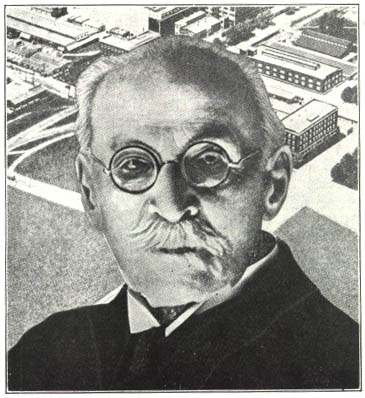
Linoleum magnate Michael Nairn owned all the Kirkcaldy linoleum factories. Nairn was delighted with Smith’s poem and printed its ending couplet on his business cards. If you visit Kirkcaldy today, you’ll see the poem plastered all over the town. Kirkcaldy has not forgotten linoleum’s role in its past.
Linoleum’s respectable ancestor
The name Nairn is synonymous with linoleum, thanks to family’s business savvy. But it was an Englishman named Frederick Walton who invented and named linoleum. Latin linum (flax) and oleum (oil) refer to linoleum’s key ingredient, linseed oil, a product of the flax plant.
Walton’s linoleum wasn’t a brand new product so much as a refinement of an earlier type of floorcovering — floorcloth. Floorcloth had been used for centuries to protect and decorate floors in high traffic and messy rooms like entry halls, dining rooms, and kitchens.
You may think of linoleum as vinyl, but vinyl didn’t come into use until the mid-20th century, after a full century of linoleum manufacture. Historic linoleum was made of a burlap or cork base, a painted design, and layers of baked linseed oil. This was very similar to floorcloth, which was made from a piece of canvas or burlap coated in layers of oil paint. The top layer often had a decorative pattern mimicking carpet or tile designs.
High-end floorcloth
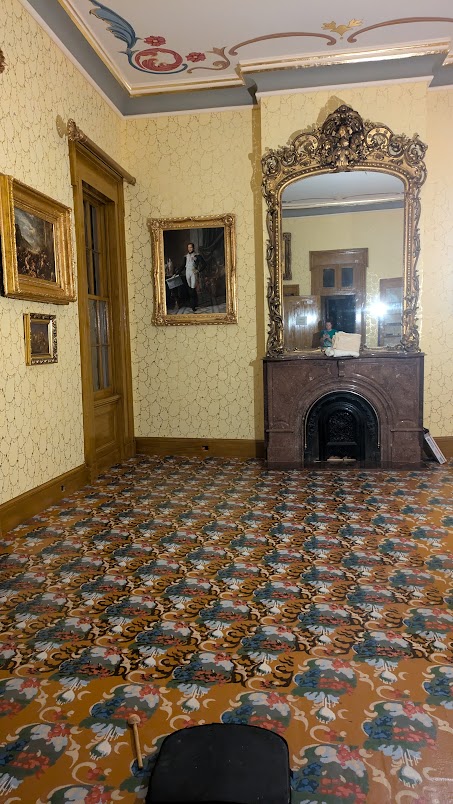
Floorcloth designs could be intricate and expensive, especially when imitating carpet. These designs sometimes employed seven or eight colors as well as molded contouring to give the floorcloth a convincing carpet-y texture.
I recently made a reproduction of the original 1850s floorcloth in Belmont Mansion’s billiard room, which mimicked a Brussels carpet. During the process, I studied the scraps from the original floorcloth as well as a number from the collection at Andrew Jackson’s Hermitage.
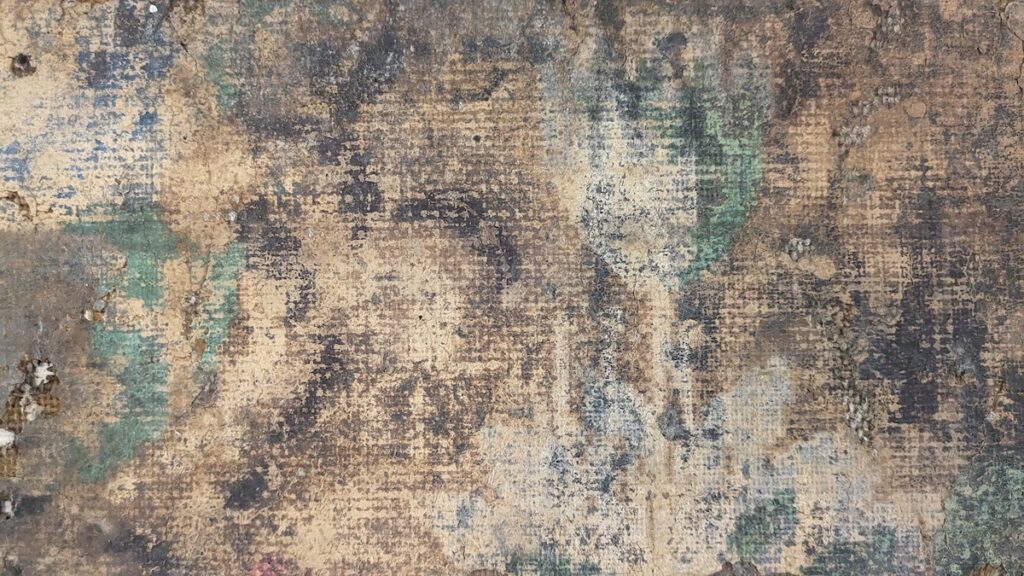
Belmont’s very worn floorcloth remnant was found beneath a later partition wall, and the Hermitage floorcloths were all retrieved from carriages. Whenever the thrifty Jacksons installed a new floorcloth in their house, they used the leftovers in their carriage floorboards. Think of them as the historic equivalent to your car’s floor mats. Luckily for history, these carriage floorcloths survived, while the larger ones in the house were discarded long ago.
Floorcloth factories
Early floorcloths were made at home or in small shops, but the age of industrialization changed this business too. In 1847, Michael Nairn (father of the M. Nairn mentioned earlier) opened the first floorcloth factory in Scotland. Nairn Sr. already operated a small canvas factory. He saw the age of wind-propelled ships closing. Judging floorcloth to be a greater opportunity, Nairn saw a chance to use his canvas for a new purpose and veered course.
Nairn constructed huge, warehouse-style factories. Stories-high scaffolding allowed workers to stretch enormous pieces of canvas vertically for priming and painting floorcloths. When it came time for a pattern to be applied, the painted canvases were cut down, divided into smaller pieces, and block-printed by hand over drafting tables.
Michael Nairn, the younger, inherited the family business shortly after and streamlined the process. He licensed Frederick Walton’s linoleum patent, experimented and changed materials, sped up the curing time, and opened more factories. In 1877, when Walton’s patent expired, Nairn snapped up the name linoleum and trademarked it. He now had at least six factories, and Kirkcaldy was the linoleum capital of the world.
Frederick Walton was furious. He partnered with an American carpet manufacturer to create the American Linoleum Company. They built the first linoleum factory in America, in Linoleumville, on Staten Island! The town has since been renamed Travis.
Not to be outdone, Nairn opened a branch of Nairn & Co. in 1886 in New Jersey. I find it fascinating how much British style and innovation continued to impact America more than a century after the Revolution. Linoleum was destined to be in every house in America.
What’s so great about linoleum?
Aside from its fascinating history, linoleum provides insight into the patterns and colors that enlivened American homes. We tend to think mainly about walls when it comes to interior decoration, but floors and ceilings make up a lot of surface area.
Linoleum floors were seldom plain. Like floorcloth, they were decorated in colorful, repeating patterns. The colors and styles employed make linoleum reliably easy to date, which is a helpful tool for historians of buildings.
The oldest linoleum scrap I’ve found in the Dalton house dates to the 1910s. Sandwiched between two wood floors in the pantry, it is possibly the kitchen’s earliest floorcovering. And because of a stamp on the back, we know it was made by Nairn & Co.! Pair the earthy red and dark green linoleum with the apple green paint we know coated the kitchen walls at that time, and you have a vibrant color palette!
The other scraps found in the house date to the late 1920s or early 1930s. These are the early years of the Methodist parsonage, which operated out of our house from 1925 until 1952. Like the Jacksons used floorcloth scraps in their carriages, the early Methodist ministers who lived here put linoleum scraps in their closet floors.
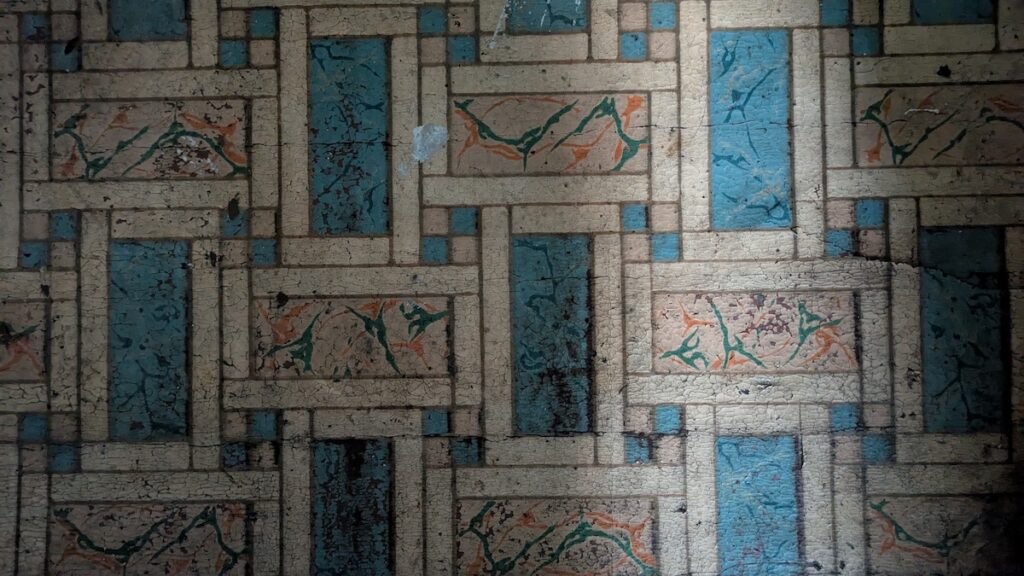
This pattern appears in both upstairs bedroom closets and was likely leftover from renovating the kitchen or bathrooms. The blocky design with its clean lines and marbleized rectangles is Art Deco.
The other two patterns come from the cook’s quarters. The earlier of these has a border, but only on two sides, suggesting this was manufactured in a set size and intended to be used like an area rug. These were called linoleum floorcloths. The occupants of the cook’s quarters cut it down to fit in the small room. Its design motif is very similar to the closet linoleum.
The personal story

Who installed this linoleum? These patterns date to the tenure of the Powell or Weldon families. Paul Shell Powell was pastor of Hopkinsville First Methodist from 1928 to 1932, and J.W. Weldon followed from 1933 till 1939. Both men and their families lived in our house. And everyone who has lived here since has lived with their linoleum! More on them in a later article.
The story told by the linoleum in the cook’s quarters is poignant. The era of an employed cook in this house ended with the Dalton family. The Methodist ministers’ wives likely did all the cooking for their households. This freed up the room beneath the kitchen, a 16×13-foot single room that had served as the cook’s quarters.
In 1930, the Powells monetized this space, renting the room to a couple, the Nisbets. I mentioned the Nisbets in an earlier article on boarders. This picture really brings the reality of the Great Depression home for me.
In 1930, Lilburn Nisbet was in his early 60s and worked as a bookkeeper. Maude, 10 years younger, was a housewife. She probably spent her days cooped up in that tiny room, pacing, sweeping, mopping, and staring at one of these linoleum floorcloths. Lilburn Nisbet spent his days at work and his evenings in a single, basement room. The 1940 census finds things different but still the same for the Nisbets. They rented on West Thirteenth Street, and Lilburn was still at work at age 72 on a WPA project. We can hope, at least, their living quarters had improved.
All that from a piece of linoleum. What power things have when linked with memory.

Grace Abernethy is a historic preservationist and artist who specializes in caring for and recreating historic architectural finishes. She earned her Master of Science in Historic Preservation from Clemson University in 2011 and has worked on historic buildings throughout the eastern United States. Abernethy was a recipient of the South Carolina Palmetto Trust for Historic Preservation Award in 2014 and won 2nd place in the Charles E. Peterson Prize for the Historic American Buildings Survey in 2011. She and her husband, Brendan, moved to Hopkinsville from Nashville in 2020. She works as an independent contractor and is a board member of the Hopkinsville History Foundation.