In this season of Lent, Christians are encouraged to act with a servant’s heart. A person having that trait has the desire to put the needs of others before their own, without expecting recognition, reward or personal gain. It is rooted in humility, sacrifice and compassion, viewing leadership and strength as opportunities to serve rather than to command.
The life and good works of retired ophthalmologist Dr. Bill Rowlett demonstrate that he fits that very definition.
As a teenage boy, Rowlett had set his sights on attending the U.S. Naval Academy at Annapolis. He changed his mind while spending the summer of 1947 in Florida. There he prayed for guidance on his future and heard in an almost audible voice God telling him, “I want you to become a doctor.” He told his mother about this in a letter that he now keeps in a frame.
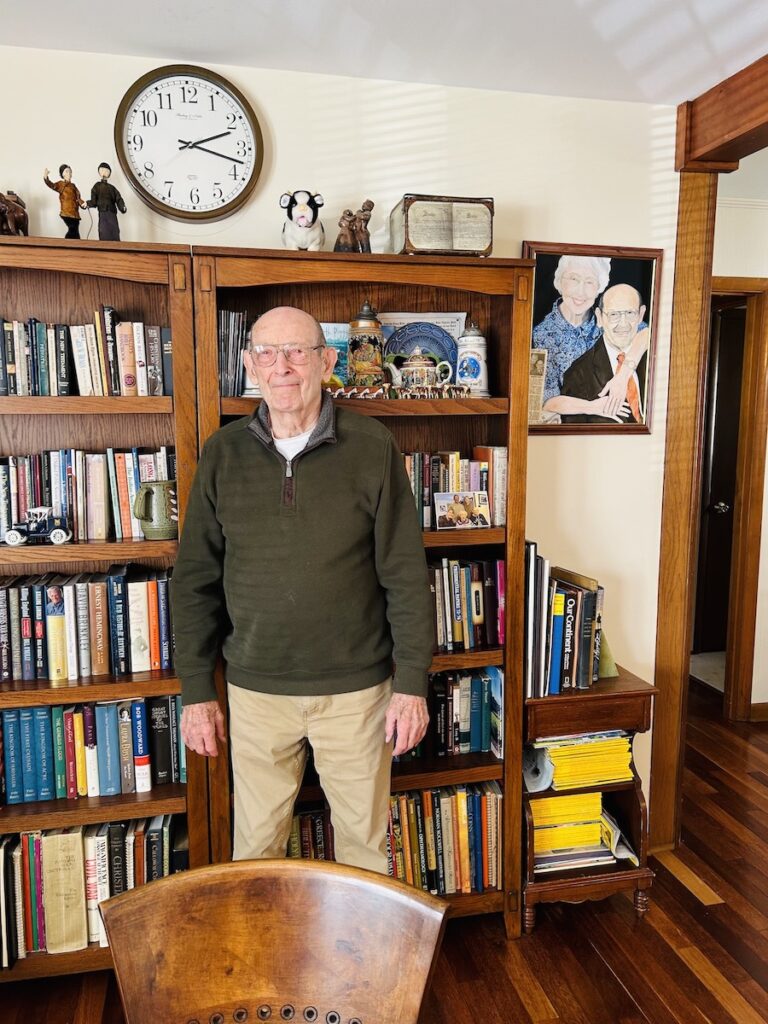
A native of Murray, Rowlett was born in 1930. His mother was an art instructor for Murray State University. His father worked for the state of Kentucky.
Rowlett began attending Vanderbilt University in 1948 and lettered in track. After two years, he transferred to Murray State so that he could complete his undergraduate career at a faster pace. He also competed in track there and set a new Ohio Valley Conference record in the broad jump in 1951. His mark was 21 feet and 6 inches, beating the previous record by 10 inches.
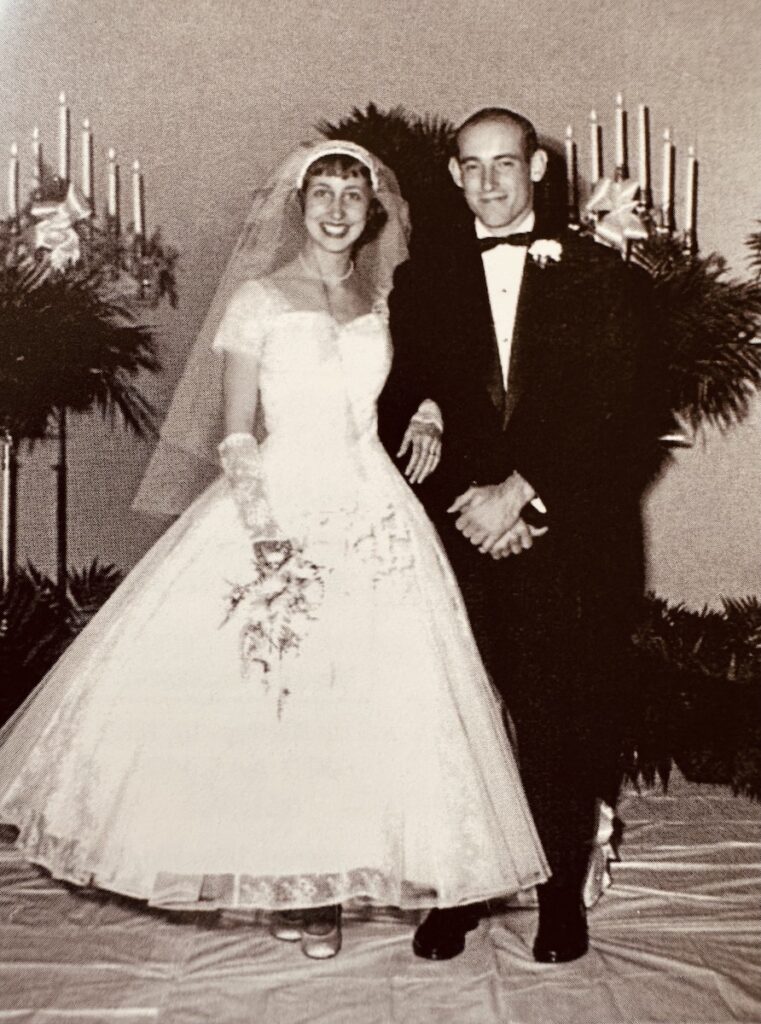
While attending medical school at the University of Louisville he met his future wife, Marilyn, on Halloween of 1953. He had gone to the Baptist Hospital and saw two attractive women playing ping pong. He decided that he would play the winner of that match. It turned out to be Marilyn, a second-year nursing student. They married in 1955, the same year his finished medical school.
In 1956, Rowlett was called into active duty in the U. S. Air Force to serve as a flight surgeon. His primary responsibility was taking care of the pilots. He was stationed in Germany for three years and flew all over Europe and to Africa. He enjoyed the trips because “traveling made me learn about other people.”
Marilyn joined him at his overseas duty station in Germany, and their first two children were born there. Flight Surgeon School included a course in ophthalmology, and that led him to choose that specialty to study after his military service.
Rowlett began a three-year residency in ophthalmology at the University of Tennessee at Memphis in 1959. After he completed the residency, his family moved in 1963 to Bowling Green, where he practiced at the Graves Gilbert Clinic. He became board-certified in ophthalmology in 1964.
Rowlett relocated his family and his practice to Hopkinsville in January of 1969. He initially set up his office in the Croft Building, which was the former gym of Bethel College, and then built a medical office on 15th Street. He conducted his practice there until he fully retired in 2002.
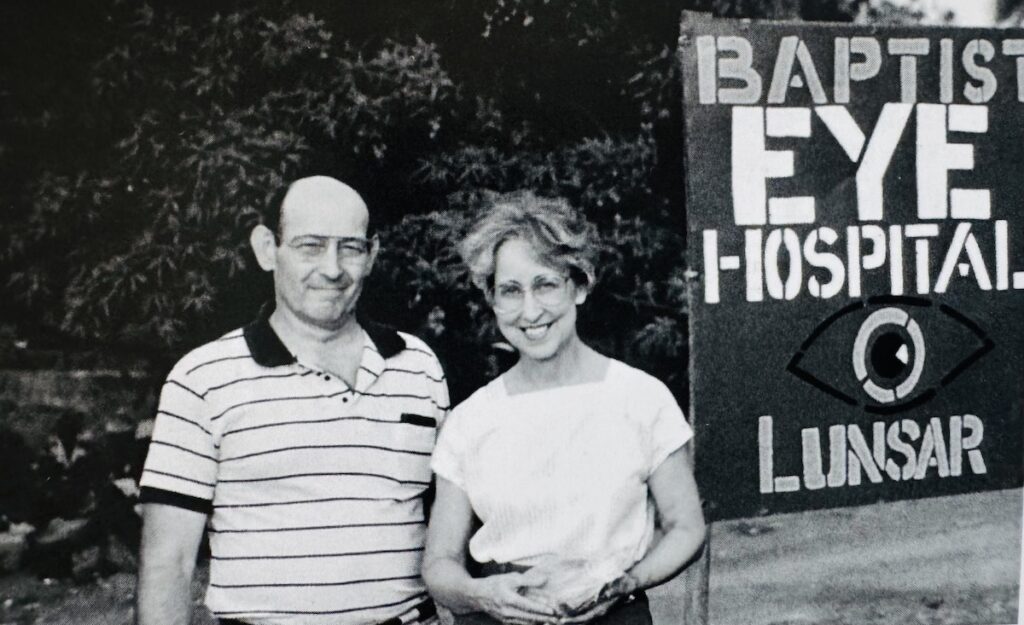
Not long into his medical practice, Rowlett had paid off all his debts and wanted to pursue some short-term mission work. From 1967 to 2006, he went on 27 mission trips to perform eye surgeries. He primarily went to Africa but also served in Central and South America, and Asia.
The trips lasted from 10 to 25 days. Marilyn accompanied him on nearly every trip and was his scrub nurse, handling the instruments and assisting in surgeries. Their children also went on some of the trips.
Rowlett removed cataracts, fixed crossed eyes and detached retinas, and performed cosmetic surgery. The countries where he served had a small number of eye specialists, he said, adding “there were many blind people with cataracts.” He was pleased to be able to teach other surgeons how to perform cataract surgery.
Some of the missionaries were ham radio operators, and Rowlett became interested in that hobby. He took his radio receiver and wire antennae with him on the mission trips.
He participated in the local Pennyrile Area Radio Society for 40 years and made more than 20,000 contacts with other operators, which are documented in a notebook. Rowlett has collected a binder full of QSL Cards that verify the contact between two operators.
Another favorite pastime was tending a garden behind his house on South Sunset Circle, where he grew tomatoes, peppers, corn, squash, cucumbers and other produce. Later he and Marilyn moved to Holiday Park to be closer to a daughter.
For many years, Rowlett was a member of Hopkinsville’s Athanaeum Society, a men’s literary and social society. He researched, wrote and presented around 25 papers to his fellow members. His thirst for knowledge also is shown by his taking courses for two years at Murray State after his retirement. He taught World Geography there as an adjunct professor during his second year.
Marilyn and Rowlett were married for 69 years. They traveled together all over the United States and visited 60 countries, including the locations of their mission trips. They also loved to take daily walks around their neighborhood and always carried plastic bags to pick up trash along the way.
Marilyn died in 2024, leaving behind her husband, four children, 11 grandchildren and four great-grandchildren.
Rowlett says that he’s always had a close relationship with Christ, whom he described as “his beacon.” He began teaching Sunday School in the 1950s and continues teaching to this day at Hillcrest Baptist Church.
One of the most important lessons Rowlett has learned along the way is to “accept what the Lord offers.”
And he leans on scripture from 1 Peter 4:11, which guided him during medical training on mission trips.
“If any man minister, let him do it as of the ability which God gives: that God in all things may be glorified through Jesus Christ.”
Julia Crenshaw is an attorney at White, White & Crenshaw in Hopkinsville. She lives on a farm in Todd County with her husband John. They have two adult children and two grandchildren.