The 160th Founders Day service on Sunday, March 1, at Freeman Chapel CME Church coincides with another milestone for the historic Hopkinsville church. It is also the 100th anniversary of Freeman’s first meeting in its South Virginia Street sanctuary.
“There’s a lot of history in these walls and a lot of good work has been done here,” the Rev. Lisa Balboa said recently as she walked through the building and noted several reminders of Freeman’s influence on the community.

“The doors have always been open for not only what’s going on with the church, with Freeman Chapel, but also what’s going on with the community,” said Balboa, who has been the senior pastor since 2015. “When you look at the CME church, that’s really one of our main focuses — social justice and social involvement. So I think that is why Freeman Chapel has been significant in the community from the beginning.”
But the birth of Freeman can be traced back even earlier that its founding in 1866 by newly emancipated Black members.
The beginning was likely in the 1830s or ‘40s when white Methodists in Hopkinsville provided space for enslaved men and women to gather and worship on their own, said Balboa, who is the first female pastor for Freeman.
“They would be worshipping in the basement. To me that is such a comforting fact,” said the Rev. Benjamin Lewis, who is Balboa’s son and an associate preacher and musician for Freeman Chapel.
“I know at least one day out of the week, they weren’t being beat, they weren’t being whipped,” he said. “That they had the opportunity to not only worship, not just in a balcony, but they were able to lead their own worship … it makes me want to tear up just thinking about it.”
Lewis thinks of the church’s founding as a huge transition in the life of Black residents of Christian County.
“When you look at slavery and the brutality of slavery, there’s no happy ending. But when we arrive here at Freeman Chapel, we get a happy ending,” he said.
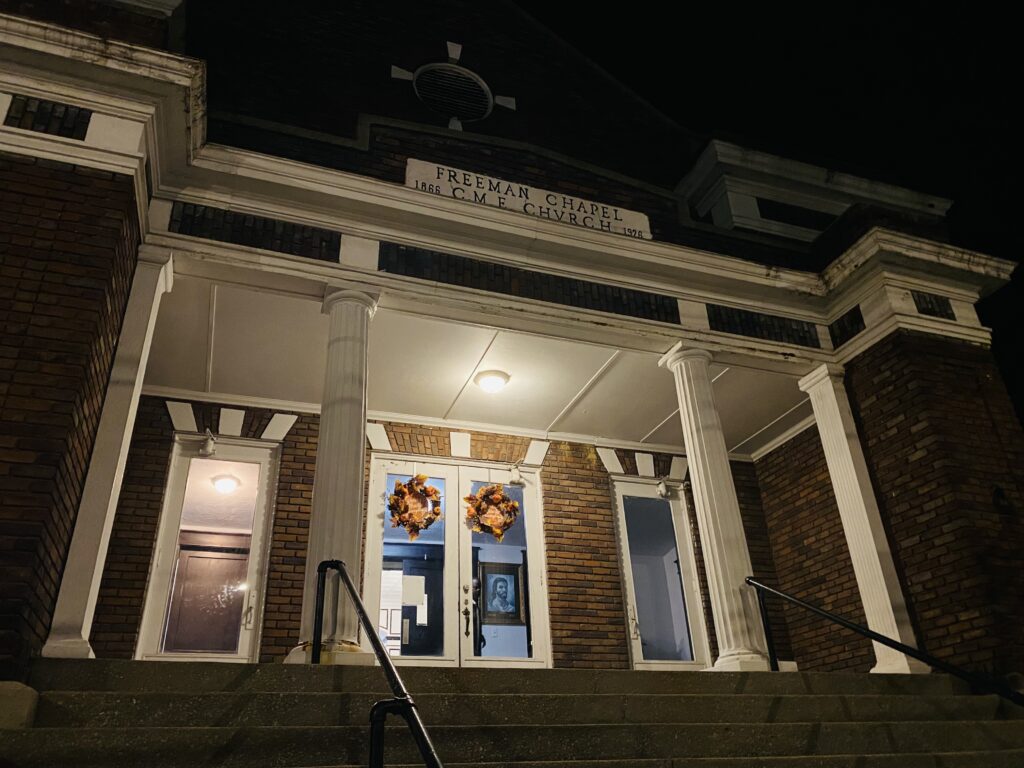
There are numerous examples of Freeman Chapel’s influence in Hopkinsville since the first church, which stood on Liberty Street between 11th and 12th streets, was established the year after the Civil War ended. Freeman Chapel provided an early preschool program for Black families, hosted large vacation Bible school sessions, was the meeting place for early NAACP meetings and banquets, and was the founding site for the Alpha Kappa Alpha sorority.
Leading up to the creation of Hopkinsville’s Human Relations Commission in 1963, civil rights attorney Louis P. McHenry and others organized a meeting of Black residents at Freeman Chapel to build support for the commission. Observers have said 1,000 people attended that meeting.
Many of Freeman Chapel’s milestones are cherished memories for members who joined the church in the 1950s and ’60s.
Patsy Moore is recognized as the longest serving member. She joined Freeman Chapel in 1958 when she was about 11 years old. She attended the church’s school for children who were about to advance to first grade at Booker T. Washington.
“The nursery school was down in the basement. I was in the second class to graduate in 1952,” she said, recalling the blue caps and gowns she and her classmates wore.
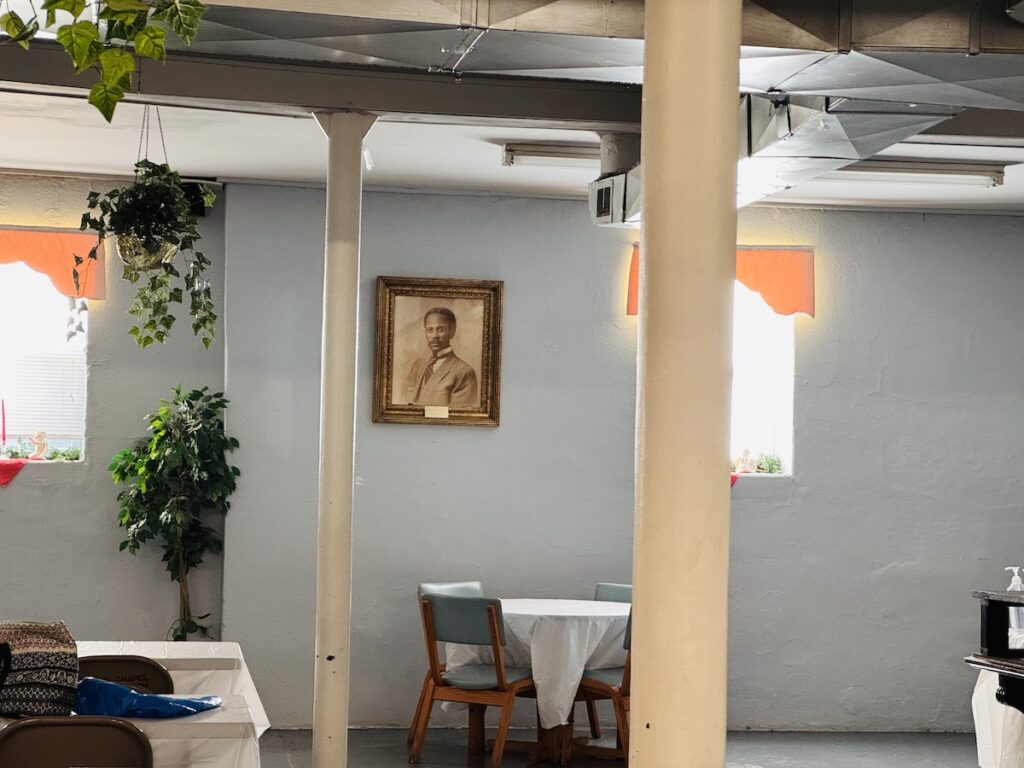
When they were a little older, Moore and her friends went to the church on Saturdays and circled the basement over and over in roller skates.
Moore can look out on the sanctuary today and see changes that younger members do not know. Years ago, before the hardwood floors were covered with carpet, a woman’s high heels or a man’s boots would announce their arrival as they walked to a pew.
For all of her life, even when she wasn’t in Hopkinsville, Freeman Chapel felt like home to Moore.
“Even though I lived out of town for several years, I never joined another church,” she said. “I always kept my membership here.”
—
Sunday’s Founders Day service at Freeman Chapel will begin at 11 a.m. The Rev. Dr. M.O. Fort, pastor of Virginia Street Baptist Church, will be the guest preacher.

Jennifer P. Brown is co-founder, publisher and editor of Hoptown Chronicle. You can reach her at editor@hoptownchronicle.org. Brown was a reporter and editor at the Kentucky New Era, where she worked for 30 years. She is a co-chair of the national advisory board to the Institute for Rural Journalism and Community Issues, governing board past president for the Kentucky Historical Society, and co-founder of the Kentucky Open Government Coalition. She serves on the Hopkinsville History Foundation's board.