As of Sept. 4, Kentucky has confirmed 35 cases of measles in its current outbreak, up from 28 cases a week ago, according to the state’s measles dashboard.
The dashboard is updated daily, Monday through Friday, except on state holidays.
Those cases are in Barren (5 cases); Caldwell (2); Christian (14); Owen (2); Todd (1); Trigg (6); and Washington (5) counties. Three people have been hospitalized.
All of the cases, including four in Jessamine County earlier this year, are in individuals who are either unvaccinated or whose vaccination status is unknown, according to the dashboard.
Further, the Kentucky Department for Public Health has warned of a potential exposure to measles in Richmond and Olive Hill after an unvaccinated, out-of-state traveler visited multiple businesses on Aug. 24, Aug. 27 and Aug. 28. Click here to see the measles exposure locations. If exposed, monitor yourself for symptoms for 21 days after the exposure, which goes through Sept. 18 for some.
Measles is a highly contagious respiratory virus that can cause serious health complications, especially in young children. Measles is spread through the air, where it can remain suspended for up to two hours. One infected person can infect nine in 10 unprotected people around them.
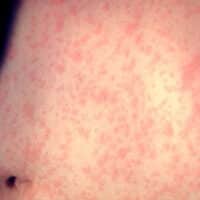
Early symptoms of measles begin seven to 14 days after exposure and include high fever, cough, runny nose, and red/watery eyes. The characteristic measles rash can appear three to five days after symptoms begin, usually on the face before spreading down to the rest of the body.
The measles vaccination series is typically given to children at 12 to 15 months and then at 4 to 6 years old, but people of any age can get the vaccine.
Anyone who is concerned about being exposed to measles is asked to call their provider or local health department to seek guidance on how to proceed. Anyone who has measles should talk to their healthcare provider from home and stay away from other people until their symptoms are resolved.
Melissa Patrick is a reporter for Kentucky Health News, an independent news service of the Institute for Rural Journalism and Community Issues, based in the School of Journalism and Media at the University of Kentucky, with support from the Foundation for a Healthy Kentucky. She has received several competitive fellowships, including the 2016-17 Nursing and Health Care Workforce Media Fellow of the Center for Health, Media & Policy, which allowed her to focus on and write about nursing workforce issues in Kentucky; and the year-long Association of Health Care Journalists 2017-18 Regional Health Journalism Program fellowship. She is a former registered nurse and holds degrees in journalism and community leadership and development from UK.