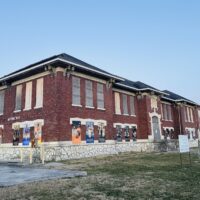
After a three-year odyssey to encourage Hopkinsville City Council to save our beautiful, historic train depot, we finally were fortunate enough to have a company “ride into town on a white horse” to help the community do what our city should have done itself: restore and preserve one of our most historic and important structures.
I have lived here all my life. My parents and grandparents did, too. The effort and interest I have invested in this community is based on a devotion to it.
Somewhere along the way we have lost a sense of purpose to take care of what we have for future generations.
Mayor George Atkins understood the importance of this approach when he and his city council saved the historic Ragland-Potter building to repurpose it as our public library. Other regional library ocials, visitors, and library patrons comment on the unique and interesting library building we have. They preserved the future of our library in the 1970s.
Mayor Sherry Jeffers understood the importance of saving our historic structures when she secured funding for restoration of our train depot. That was about 40 years ago.
Things started changing about the time a group of concerned citizens attempted to repurpose our Carnegie Library. With very little interest from local government, they admirably invested in saving the building and have been able to offer it as a community meeting venue.
Subsequently, thank goodness we had such a diligent board of directors for our museum. They worked very hard to procure funding through tax credits and a transient room tax, obtained by our Fiscal Court, to save and restore our former post office. I use this opportunity to point out the utterly devoid use of inspired architecture when we see the post office structure we now have which replaced that one. That should be a lesson to all of us.
Some of us who have lived here long enough can remember years ago when our Fiscal Court proposed gutting the Alhambra building to make room for office space. After a profound uproar from a large number of citizens, our magistrates backed down. What if we hadn’t persisted in our outrage then? Think of the loss we could have had!
My husband and I live in the Germantown neighborhood of Nashville part time. We bought a place there 16 years ago, during the housing crisis, when we could afford it, and so we could be closer to our grandchildren, who live in Nashville. Germantown is the oldest neighborhood in Nashville.
Germantown’s neighborhood association has worked with city officials to see that the historical significance of the area will be maintained. Consequently, we have brick sidewalks, period street lights, and homes that have to adhere to the historic presence of a particular structure.
As I was walking in the neighborhood recently, I noticed that a vacant house was being renovated. When I peered in the window, I was shocked to see that the entire house had been gutted, but the exterior had been left unchanged.
My point in relating this story is that 60 years ago Germantown was a part of Nashville where no one wanted to live. But, through community/government intervention and investment, the houses that were at one time considered to be tear-downs are now selling for as much as $1 million and more.
I know for a fact that our Mayor J.R. Knight wanted to save our train depot. His city council was the bugaboo. We need to think of money spent to improve our town as an investment, not a burden. It has not always been this way. I hope our government leaders will look to the past to understand what must be done for our future.
The Webber Building would be a good place to turn this attitude around. Why couldn’t we save the facade, like they do in other cities, if it really is structurally unsound? Invest in our past to insure a bright future! Don’t let negativity cause our downfall. I know our city has enough money to do this, thank goodness. Every time we tear down a historic building, we further compromise the integrity and character of our town.
Margaret Macdonald,
Christian County