A recent column said nonpartisan judicial elections present a problem for voters, namely, “How can voters know how judges may rule on the cases that come before them?”
The key word in that sentence is “may.” Judges should not commit to ruling one way or the other, but to decide cases based on the law and the facts. Voters must remember that judicial elections are not like elections for legislative or executive offices, in which candidates make pledges to get support. Judges must keep an open mind and avoid obligations beyond their duty to follow the law and the facts.
Why have nonpartisan judicial elections? The simple answer is that the Kentucky Constitution requires it and has for more than 50 years.
A deeper dive into the role of the judiciary in our system of government also suggests why, if we are to select judges by popular election, we should do so in nonpartisan elections.
The judicial determination of what the law is should not depend on what is most popular. That may be an appropriate consideration for the legislature, and even the executive branch of government. However, that is not what judges do. Courts and judges resolve disputes by deciding facts, interpreting rules, statutes, ordinances, constitutions, and the common law. That determination is not based on popular opinion. Occasionally the courts must disagree with the other branches of government.
Perhaps this is an oversimplification, but it may be a helpful reminder:
The legislature makes the law.
The judiciary interprets the law
The executive enforces the law.
The judicial process works best when judges approach cases with an open mind and not committed to prior positions taken for partisan reasons. The judicial process is also at its best when it is the result of a formal, orderly procedure of hearings and trials devoted to fairness and informed decision making. It may not be perfect, but we submit it is the best we can devise.
We believe it would be appropriate for judicial candidates to discuss societal and legal issues if all sides of a controversy were presented. However, opinions should not be expressed in such a way that suggest the candidate already has determined what the outcome should be.
Other areas of inquiry also may be helpful. Retired Judge Julia Adams of Winchester, who has served both as a circuit and district judge, has suggested the following questions that could be properly asked of judicial candidates.
- What do you see as the challenges facing our judicial system?
- What changes would you advocate in our system, if elected?
- What do you see as the challenges facing our circuit/district?
- Have you ever represented a litigant in a jury trial? How many defendants and how many plaintiffs?
- Would you agree to serve as a specialty court judge, those courts which focus on drug, mental health, and veterans treatment issues?
- Have you received any training with participants who suffer addiction issues, mental health issues, etc.?
One final point: Our nation and Kentucky are deeply divided by excessive partisanship. Why would we make judicial selection more partisan, especially now? If we need to make changes, let’s do so thoughtfully. Kentuckians deserve a fair and open-minded court system committed to the rule of law.
This piece was also signed by Kate Hendrickson, a former commonwealth’s attorney for Mason, Fleming and Bracken counties, and Julia Adams is a retired circuit and district judge in Clark and Madison counties.
Kentucky Lantern is part of States Newsroom, a nonprofit news network supported by grants and a coalition of donors as a 501c(3) public charity. Kentucky Lantern maintains editorial independence. Contact Editor Linda Blackford for questions: info@kentuckylantern.com.
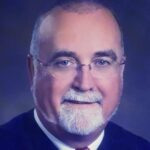
Charles Boteler is a retired Hopkins Circuit Court judge and chair of the Kentucky Judicial Campaign Conduct Committee, a private, nonprofit, nonpartisan group organized 20 years ago to safeguard the integrity of the judiciary in Kentucky judicial elections.
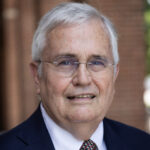
Al Cross is professor emeritus of journalism at the University of Kentucky. He was the longest-serving political writer for the Louisville Courier Journal (1989-2004) and national president of the Society of Professional Journalists in 2001-02. He joined the Kentucky Journalism Hall of Fame in 2010.