Banned Books Week — the annual observance that promotes the freedom to read, question, think and express ideas — wraps up this weekend with the theme “Let Books Be — Protect the Freedom to Read.”
Amen.
And yet … I have not always appreciated the need for Banned Books Week. Some years ago, I wondered if this whole thing wasn’t just an exaggerated concern invented by a group seeking attention and a reason for being. After all, how difficult could it be to get your hands on a book if you wanted it?
Of course, I was way off the mark — probably because I had never been denied access to books. Part of this was privilege. My parents read, kept books in house all my life and never once said I couldn’t read something.
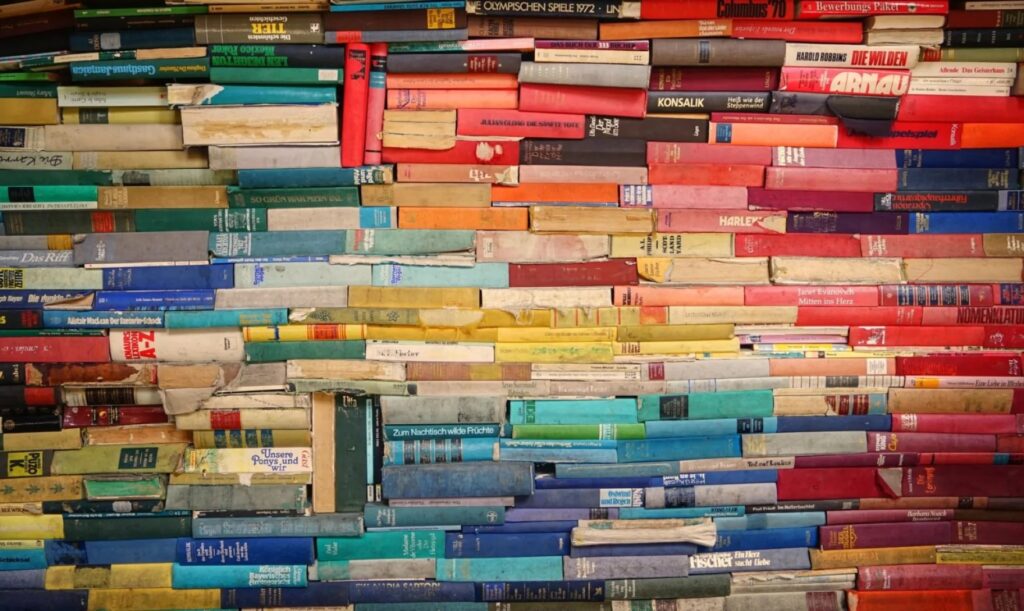
I read a good deal in high school — and not just the books assigned in classes. I read many books no one told me to read, mainly because I preferred them over homework assignments in my least favorite subjects — math and science.
So, in response to Banned Books Week, I wondered how many of my assigned books and how many of my chosen books would have made a list of banned or restricted titles if book banning had been such an issue in the 1970s, which was a few years before the American Library Association established Banned Books Week to address a surge in books being challenged in schools and libraries.
I searched online for information about several of my favorite chosen books from the late 1970s. Topping the list of the best ones I can still recall are “Roots: The Saga of an American Family” by Alex Haley, “1984” by George Orwell, “The Good Earth” by Pearl Buck, “A Tree Grows in Brooklyn” by Betty Smith and “The Yearling” by Marjorie Kinnan Rawlings.
Every one of these books has been challenged, restricted or banned at some point. So under different circumstances, I could have been denied these books.
My picks in high school also included many books about horses, such as “My $50,000 Year at the Races” by the thoroughbred handicapper Andrew Beyer and several of British veterinarian James Herriot’s books about life in the Yorkshire Dales. These titles seem to have escaped the censors, although it is fun to imagine a raised eyebrow over my interest in making big money at the race track before it was legal for me to place bets at a parimutuel window.
I also looked into the history of banning for some of the best books that my teachers assigned, which included “Catcher in the Rye” by J.D. Salinger, “Catch 22” by Joseph Heller, “Friendly Fire” by C.D.B. Bryan, “A Separate Peace” by John Knowles, “To Kill a Mockingbird” by Harper Lee, “The Hobbit” by J.R.R. Tolkien and “Act One” by Moss Hart. The memoir “Act One,” a wonderful book about one man’s journey from childhood poverty to success on Broadway theater, appears to be the only one of these books I read for high school classes that didn’t raise suspicion with someone looking to restrict access.
You might think that restrictions on books available to young readers come mainly from parents who have every right to look out for the best interests of their children.
But according to the American Library Association, only a fraction (3%) of book challenges start with parents. “In 2025, 92% of all book challenges were initiated by pressure groups, government officials and decision makers,” the ALA reports.
Earlier this year, novelist and independent bookstore owner Ann Patchett, of Nashville, spoke about book banning when she addressed an event for the Committee for the 1st Amendment. It’s one of the best statements I’ve heard about what’s a stake with book banning.
“What book can you think of that is as dangerous as an iPhone. And what book is as dangerous as a gun,” said Patchett.
“Here is the truth: No one bans anything that they love. So, no matter how dangerous it is, we are a nation in love with phones and guns, and so conversations about keeping our children safe, by default, go to books.
“Consider loving books. By which I mean reading books. Take a stand in your own life and raise up a nation who will rise up to cry, ‘Hell, no. You may not take my copy of ‘Beloved’ off the school shelf.
“If we as a nation love our books, we will learn our history and remember our humanity — and no one can take that away from us.”
Here’s to more reading and fewer restrictions for all of us.
Jennifer P. Brown is co-founder, publisher and editor of Hoptown Chronicle. You can reach her at editor@hoptownchronicle.org. Brown was a reporter and editor at the Kentucky New Era, where she worked for 30 years. She is a co-chair of the national advisory board to the Institute for Rural Journalism and Community Issues, governing board past president for the Kentucky Historical Society, and co-founder of the Kentucky Open Government Coalition. She serves on the Hopkinsville History Foundation's board.