Sen. Mitch McConnell has long followed the political maxim, “You can’t get into trouble for something you didn’t say,” but his taciturn approach caused turmoil for him and the country when he went four weeks without explaining why he was hospitalized. And it gave Gov. Andy Beshear an opening to burnish his potential-president profile.
The episode says much about the lack of trust and good faith in American politics and the media — not so much the news media that should practice a discipline of verification, but social media that have little discipline or verification. It also indicated McConnell’s limited understanding of a media environment that has changed greatly since he first went to the Senate 42 years ago, at age 42.
By issuing only vague statements about his situation, McConnell left a vacuum filled by speculation, suspicion, conspiracy theories and outright falsehoods that erode confidence in the political system. We’ve seen more of that in the last four weeks than on any Kentucky subject I can remember; I saw reasonable, educated people adopt unreasonable beliefs and say unreasonable things.
In the absence of evidence came raw first-responder audio in which a responder said an unconscious person at McConnell’s Washington address was getting CPR. A dispatcher not on the scene referred to “cardiac arrest.” The old journalistic caution about using such sketchy evidence no longer applies, in a fractionalized media environment where everyone is hungry for audience and many who claim to be journalists are more interested in getting it first than getting it right.
The audio release should have cued McConnell to say more, but he’s always been reluctant to talk about his health, and he may have figured the need was less than usual because he is retiring at the end of the year. His pride probably got in the way, too. In his Sunday statement, he said “You all know how folks of my generation often hesitate to share the vulnerability that comes with growing older.”
Soon after the audio came out, the Democratic nominee for McConnell’s seat, Charles Booker, said, “It’s time we know what’s happening. When we don’t know if our senator is alert, conscious, or capable of serving, that’s not a partisan question.”
After a far-right influencer reported without evidence that McConnell was “brain dead,” and more news stories ensued, Beshear asked McConnell for “clear communication” about the senator’s “ability to hold office,” and immediately publicized the letter. All that apparently prompted McConnell to send word through friendly filters — Senate leaders and his former aide, commentator Scott Jennings — that he was talking business with them.
But in our cesspool of misinformation, and increasing doubts about an elderly Congress, where McConnell remains a Democratic bogeyman, the suspicion whirlwind remained. Some still couldn’t accept the photographic evidence he issued along with his statement, showing him casually holding a Sunday sports section as subtle verification. A video would have been better, but I consider the photo trustworthy and reject all the notions that it was somehow manipulated or manufactured. I have dealt with McConnell and his staff for almost 40 years, and they’re not in the hoax business, though they’re still being more translucent than transparent.
In the photo, McConnell looked pretty much as I saw him in May, in two long interviews for a summary of his career that the Kentucky Historical Society plans to publish in November. His hospitalization didn’t surprise me, and neither did his statement that it came after a fall. He was escorted into the interview rooms by three people, one on each arm and one walking backup. He said the leg that polio damaged when he was a young child had been giving him more trouble lately, so it also didn’t surprise me that the Senate physician said McConnell has fallen several times this year. Even in the prime of life, he avoided walking down stairs; now, he is increasingly frail, and he just spent four weeks in the hospital battling pneumonia, which gets deadly at his age, and likely getting weaker. His recovery is understandably slow, and the next time we see him, he will probably be in a wheelchair. I wish him well.
Just before McConnell issued his statement, Beshear said on Al Sharpton’s “Politics Nation” show that the senator’s long silence “raises serious and legitimate concerns” and “If he is incapacitated, if there is a vacancy, I will look at my authority” under Section 152 of the state constitution, which says the governor appoints to fill vacancies in “offices for the state at large.”
Republicans say that doesn’t include U.S. senators, and I agree; senators are a province of the U.S. Constitution, which allows legislatures to let governors appoint an interim senator pending an election. The law allowing that in Kentucky was repealed in 2024 by the Republican legislature, requiring a special election to fill a Senate vacancy.
Beshear’s concerns were legitimate, but his posturing served his politics. He would like to be president, and the main rap against him is that he’s too nice for a party that wants a fighter.
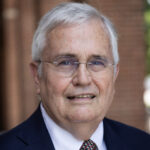
Al Cross is professor emeritus of journalism at the University of Kentucky. He was the longest-serving political writer for the Louisville Courier Journal (1989-2004) and national president of the Society of Professional Journalists in 2001-02. He joined the Kentucky Journalism Hall of Fame in 2010.