Despite a robust screening system, Kentucky is the worst state in the nation for new lung cancer cases, a report shows.
If you smoke and want to quit, call the national quit line at 1-800-784-8669 to speak with a confidential coach.
The American Lung Association’s State of Lung Cancer report, released Wednesday, shows lung cancer is the commonwealth’s leading cause of death. Kentucky has the second-highest rate of smoking in the nation — behind only West Virginia.
Shannon Baker, the advocacy director for the Lung Association in Kentucky, said the state’s return to second-worst smoking rates (a decline from the previous ranking of fourth in the nation) is “a threat to the progress that we’ve made” to combat lung cancer. Shannon Baker is the advocacy director for the American Lung Association in Kentucky. (Photo provided)
Kentucky is screening lung cancer at higher rates than the national average, and has a law on the books requiring insurance to cover biomarker testing. Biomarker testing “is a way to look for genes, proteins and other substances (called biomarkers or tumor markers) that can provide information about cancer,” according to the National Cancer Institute.
Despite this work, cancer cases remain high.
Smoking is the leading cause of lung cancer, and Kentucky “has a long history with tobacco and tobacco use being generational,” Baker said.
“We know nicotine is incredibly addictive, and so even those who want to quit have a tough road ahead of them,” she said.
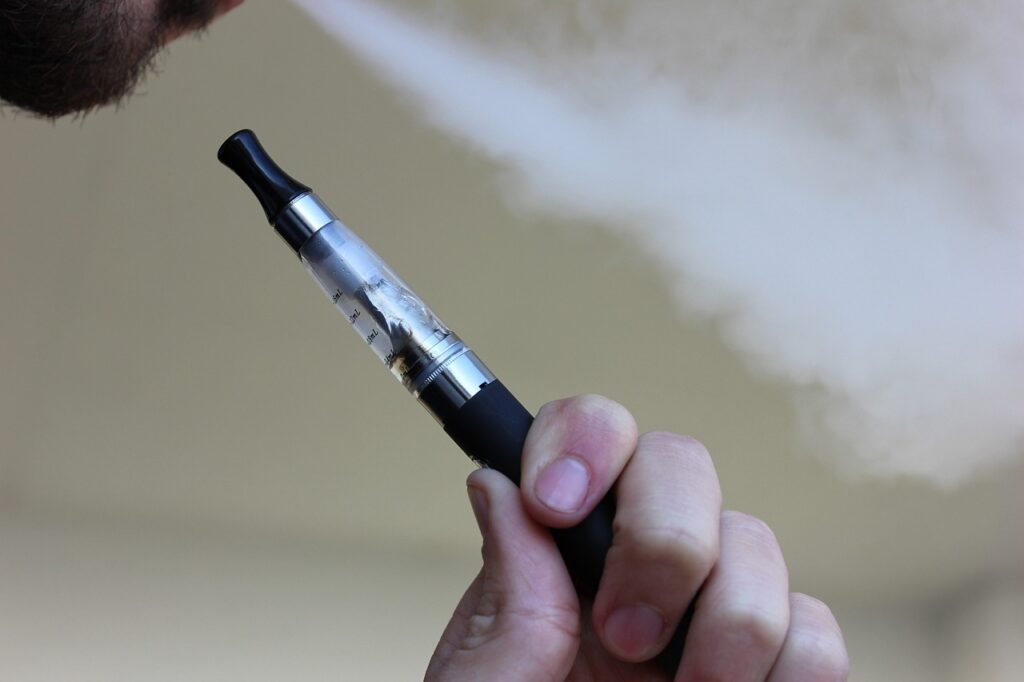
Other factors making Kentucky a high-risk state for lung cancer include its high rates of radon, an odorless gas that can cause lung cancer, and the prevalence of vaping.
“While the science continues to collect around (vaping), we can all say, from just a common sense perspective, that inhaling aerosol and carcinogens and chemicals and fine particles deep into our lungs isn’t likely to be good in the long run, is it?” Baker said.
Barriers to convincing youth not to vape persist, she said. Even the name implies that “it’s a harmless water vapor — and that is a misnomer, but it’s not an accidental one.”
“Think of the tutti frutti flavors, and think of the social media advertising and the influencers and the ‘super cool’ — tongue firmly in cheek — devices,” Baker said. “Our youth have been targeted. They have been lured with flavors, targeted with media … and addicted to incredibly and increasingly high levels of nicotine.”
During the 2025 session, the Kentucky General Assembly passed a law to license all retailers who sell tobacco and vape products, giving the Department of Alcoholic Beverage Control (ABC) inspection and enforcement powers over them, similar to those it exercises over alcohol retailers.
This move, Baker said, is “helping to better protect our kids” but “we have ground to gain.”
By the numbers
Other findings from the 2025 report show:
- The 2022 smoking rate in Kentucky was 17.4%, higher than the 2023 national rate of 11.4%.
- The rate of new lung cancer cases in Kentucky is 84.1, significantly higher than the national rate of 52.8.
- Over the last five years, the rate of new cases in Kentucky improved by 9%.
- The percent of people alive five years after being diagnosed with lung cancer in Kentucky is 25.5%, lower than the national rate of 29.7%.
- Over the last five years, the survival rate in Kentucky improved by 32%.
- In Kentucky, 27.3% of cases are caught at an early stage, lower than the national rate of 28.1%.
- Over the last five years, the early diagnosis rate in Kentucky improved by 12%.
- Over the last five years, the percent of cases receiving no treatment in Kentucky increased by 36%.
- In Kentucky, 36.9% of radon tests results were at or above the action level recommended by the Environmental Protection Agency (EPA).
Radon testing — either professional or through a do-it-yourself kit — shows radon levels in the home, according to the Centers for Disease Control and Prevention. People should test their home if it’s never been tested, before buying or selling and before and after renovations, according to the CDC.
Looking to 2026
During the 2026 legislative session — during which lawmakers will pass a two-year state budget — Baker said the Lung Association will ask for an additional $2 million for the Tobacco Prevention and Cessation program, which works to end youth smoking, among other work. If granted, the money would double the program’s budget.
The Lung Association will also continue pushing for JUUL settlement dollars to be moved from the state’s general fund into the Tobacco Prevention and Cessation Program. Juul, an e-cigarette company, has to pay Kentucky more than $14 million dollars following a lawsuit over marketing practices aimed at youth. JUUL’s next payment to Kentucky is around $2 million and due in December 2025.
Advocates pushed for this in 2024, but “this is a budget session,” Baker said, “and so it’s more appropriately timed this year.” SOLC 2025 State Infographic-Kentucky
This article is republished under a Creative Commons license from Kentucky Lantern, which is part of States Newsroom, a network of news bureaus supported by grants and a coalition of donors as a 501c(3) public charity. Kentucky Lantern maintains editorial independence. Contact Editor Jamie Lucke for questions: info@kentuckylantern.com. Follow Kentucky Lantern on Facebook and Twitter.

Sarah Ladd is a Louisville-based journalist and Kentuckian. She has covered everything from crime to higher education. In 2020, she started reporting on the COVID-19 pandemic and has covered health ever since.